
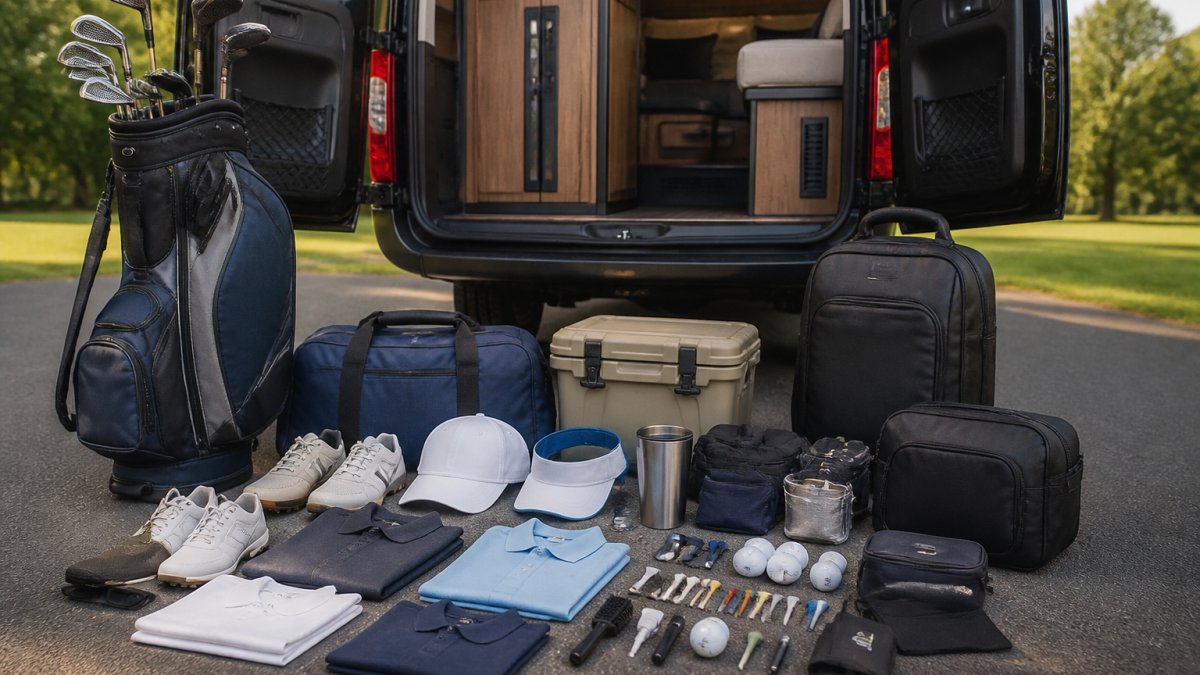
Table of Contents
- Start With a Golf Trip Packing List Built Around Your Rounds
- How to Travel with Golf Clubs Without Damaging Them
- Golf Travel Accessories That Earn Their Space
- The Golf Road Trip Checklist for Car Organization and Safety
- Essential Gear for Golf Road Trips: Clothing, Shoes, and Weather Layers
- Protect Your Gear From Heat, Moisture, and Theft in a Parked Vehicle
- Budget and Value Tiers for Golf Road Trip Gear
- Conclusion
- Frequently Asked Questions
Last Updated: October 21, 2026
Start With a Golf Trip Packing List Built Around Your Rounds
The best essential gear for golf road trips starts with one question: how many rounds are you actually playing?
Gear that rattles around loose gets damaged. Gear packed with a plan arrives ready to play.
Here’s the framework we recommend: build your golf trip packing list around three variables.
- Rounds: one set of gloves per two rounds, plus one spare
- Days: one base layer per day, two if you sweat heavily
- Weather: check the forecast 48 hours out and pack for the worst day, not the average
That last point matters more than most golfers admit. A trip that looks sunny on Monday can turn soggy by Thursday.
Must-Have vs. Nice-to-Have Categories
Split every item into two buckets before you pack anything.
Must-haves are the things that end your round if they’re missing: clubs, balls, tees, shoes, glove, rain jacket, and your wallet.
Nice-to-haves improve the trip but won’t ruin it: an extra umbrella, a club cleaner, a ball marker collection, bug spray.
The rule is simple. Pack all must-haves first, then fill remaining space with nice-to-haves. Never the reverse.
How to Travel with Golf Clubs Without Damaging Them
Club damage during travel almost always comes from movement, not impact. Clubs that shift inside a bag grind against each other for hundreds of miles.
The fix is a proper travel bag and a tight pack. According to guidance from the USGA on equipment care, protecting your equipment between rounds is part of keeping clubs performing as designed.
Start with a soft travel case with rigid top protection, or a wheeled bag if you’re hauling through airports and hotel lobbies. Both beat a bare carry bag thrown in the trunk.
Club Protection and Travel Bag Choices
Here’s how we’d pack clubs for a road trip:
- Use headcovers on every club, not just the woods
- Pack a towel between irons to stop metal-on-metal contact
- Remove loose items from pockets so nothing presses against shafts
- Strap the bag upright so clubs don’t lie flat and flex
- Add a rain hood even in dry weather, since it keeps dust and grit out
A soft travel case works well for car trips because it flexes into tight spaces. A wheeled bag wins when you’re moving gear between hotels.
Slide a pool noodle or a rolled towel down the center of your bag before a long drive. It stops irons from collapsing inward and pressing on your driver shaft, which is the most common cause of bent shafts on road trips.
Golf Travel Accessories That Earn Their Space
Most golf travel accessories are clutter. A few earn permanent spots in the bag. The difference is whether you’d notice their absence mid-round.
These are the ones we’d never leave behind:
- Club cleaner and a small brush for grooves
- Ball marker and divot tool (many courses now expect you to repair your own marks)
- Extra spikes and a spike wrench
- Spare gloves, at least two
- First-aid kit with blister care
The PGA of America’s player resources consistently stress preparation as a habit, and it applies to gear as much as swing.
Skip the gadget aisle. A club cleaner and a spare glove will do more for your round than any novelty item.
The Golf Road Trip Checklist for Car Organization and Safety
A golf road trip checklist should cover two things: keeping gear organized and keeping the drive safe. Most packing guides ignore the second half entirely, which is why this is where a road-trip article can separate itself from a generic golf-trip packing list.
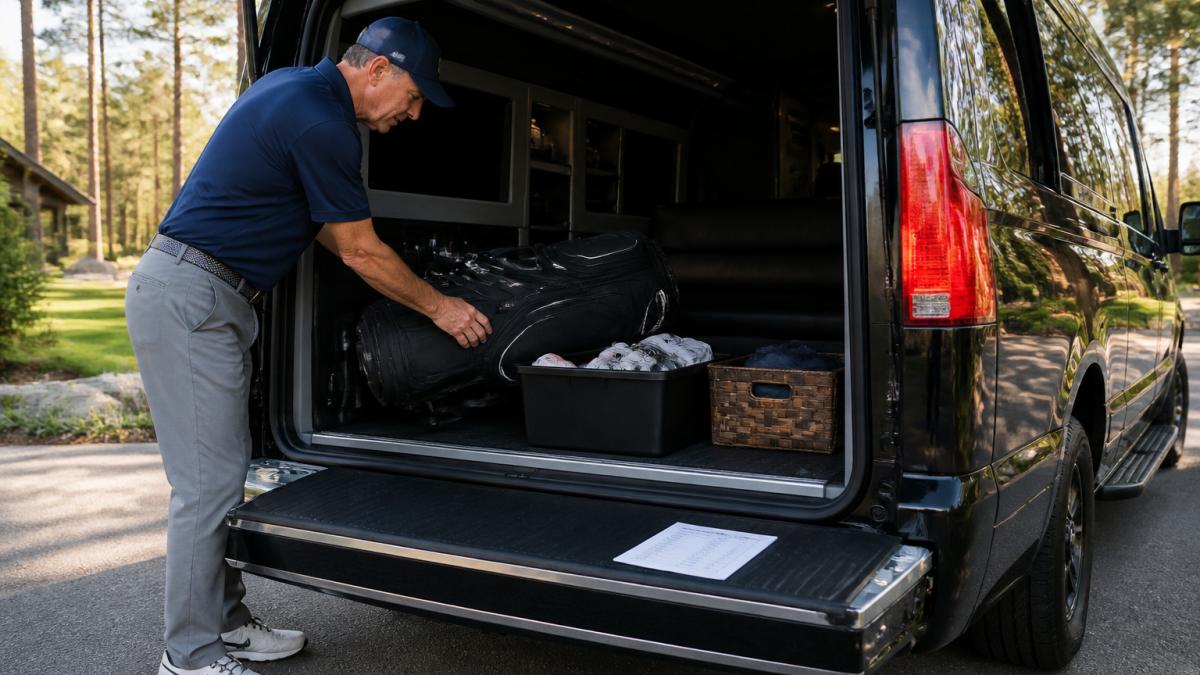
Trunk Layout That Protects Clubs and Keeps Essentials Reachable
The single biggest cause of road-trip club damage is gear shifting during braking and turns. Build the trunk in layers so nothing moves:
- Bottom layer: heavy, low-profile items, cooler, shoe bag, emergency kit, and a folded blanket or cargo mat to stop sliding.
- Middle layer: golf bags laid flat or strapped upright against the seat back, never loose on top of other gear.
- Top layer: soft items only, rain gear, extra layers, towels. Nothing rigid above the clubs.
- Cabin, within reach: sunscreen, sunglasses, phone mount, charger, snacks, and a small towel. These should never require pulling over to access.
Use cargo blocks, a trunk organizer, or a simple ratchet strap across the bag to keep clubs from rolling. If your vehicle has tie-down anchors, use them, a bag that shifts once will shift every stop.
Vehicle Safety and Roadside Essentials
Safety gear is not optional on a trip where you may drive several hours between courses. Pack these before you leave:
- Tire pressure gauge and a portable inflator, check pressure cold, before the first drive, and again before the return leg
- Jumper cables or a jump-starter pack
- First-aid kit with blister care, pain reliever, and any personal medication
- Reflective triangles or a warning triangle and a flashlight with fresh batteries
- Phone mount and a charging cable plus a backup battery bank
A common pattern among experienced road-trippers is to do a five-minute walk-around before each long leg: lights, tires, fluid leaks, and that nothing is loose in the cabin. It sounds basic, but it catches most problems before they become roadside delays.
Trip-Length Module: What Changes for One Day, a Weekend, or a Multi-Round Swing
Use the same core kit and scale only the consumables:
- One-day trip: one glove, one sleeve of balls, one towel, water, snacks, sunscreen. No travel case needed if clubs ride in a secured bag.
- Weekend (two rounds): two gloves plus a spare, two sleeves of balls, rain jacket, extra socks, shoe bag, and a change of clothes.
- Multi-round (three or more): add a second pair of shoes, spare spikes and wrench, an extra towel, and a laundry bag for wet gear. Confirm tee times and course policies for each stop in advance.
Keep a dedicated “car kit” packed between trips, charger, first-aid kit, sunscreen, towel, and a small tool kit, so you are not rebuilding it every time. Restock it when you get home, not when you leave.
Essential Gear for Golf Road Trips: Clothing, Shoes, and Weather Layers
Clothing is where experienced travelers separate from first-timers. The rule: pack base layers you can add or remove, not one heavy outfit.
Bring:
- Two base layers per three days
- One mid-layer or vest
- One rain jacket and a packable umbrella
- Two pairs of shoes: one to play in, one to drive and recover in
- Extra socks, always
Rain Gear, Sun Protection, and Extra Footwear
Rain gear should live in the bag permanently, not get packed when the forecast turns.
Sun protection matters just as much. The Skin Cancer Foundation’s sun safety guidance recommends reapplying sunscreen every two hours outdoors, which on a slow round means at least twice.
Extra footwear in a shoe bag keeps mud out of the car and gives your feet a break after 18 holes.
Leaving wet shoes and rain gear sealed in a plastic bag overnight is the fastest way to grow mildew. Air them out at the hotel, then repack dry. Mildew ruins shoes and smells worse than any course you’ll play.
Protect Your Gear From Heat, Moisture, and Theft in a Parked Vehicle
A parked car is a gear killer. Heat warps grips and softens adhesives. Moisture breeds mildew. And a bag visible through the window is an invitation.
Three habits solve most of it:
- Park in shade or a garage when you can. Heat buildup inside a closed vehicle is the main threat to grips and gloves.
- Never leave clubs visible. Cover them or stow them out of sight.
- Air out wet gear before you seal it in the car overnight.
A soft travel case with a cover helps with both heat and theft. GOLF Cruiser’s custom club storage keeps equipment secured and hidden, which is one reason we build layouts around the bag rather than around cargo space.
Budget and Value Tiers for Golf Road Trip Gear
You can equip a golf road trip at almost any budget. What changes is how long the gear lasts and how much protection it offers. The useful split is not cheap versus expensive, it is must-have versus optional upgrade, with a realistic price range for each.
Must-Haves First
These are the items that end a round or damage equipment if missing. Buy these before anything else:
- Travel bag or case with rigid top protection: roughly $80-$250 depending on soft versus hard-shell and wheeled options
- Rain jacket: roughly $50-$150 for a packable, breathable shell
- Two to three gloves: roughly $15-$30 each
- Shoe bag: roughly $15-$40
- Sunscreen (SPF 30+), sunglasses, and a hat: roughly $10-$60 combined
- Basic first-aid and blister kit: roughly $10-$25
Optional Upgrades That Pay Off
Spend here only after the must-haves are covered:
- Wheeled bag with rigid top: roughly $150-$350, worth it if you move between hotels often
- Hard-shell travel case: roughly $200-$400, best for frequent air or long-haul travel
- Dedicated shoe bag with ventilation: roughly $25-$60, keeps mud out of the car and lets wet shoes breathe
- Packable umbrella: roughly $25-$60
- Club cleaner and groove brush: roughly $10-$25
- Portable inflator and jump-starter: roughly $40-$120 combined
Where Spending Actually Pays Off
The highest-value purchase for most golfers is a proper travel bag with rigid top protection. It is the one item that guards everything else you own, and a good one outlasts several cheap replacements.
A practical rule: put roughly 60-70% of your gear budget into protection and weather layers, and the rest into consumables and small tools. That ratio keeps clubs safe and keeps you playing in conditions that would send underprepared golfers home.
Buy protection first, comfort second, gadgets last. A $150 travel bag protects $1,500 worth of clubs; a $40 gadget protects nothing.
Conclusion
Packing for a golf road trip comes down to planning around your rounds, protecting your clubs, and keeping gear organized in the car. Get those three right and the trip takes care of itself.
That’s the thinking behind every GOLF Cruiser van. We build hand-crafted luxury vans with custom club storage, flexible layouts for families or full teams, and the interior space to keep gear secure and out of sight.
Ready to make every road trip easier? Contact Us Today!
Frequently Asked Questions
What should I pack for a golf road trip?
Pack golf clubs in a padded travel bag, two pairs of golf shoes, spare gloves, and a full rain suit. Add base layers, sunscreen, sunglasses, and a hat for sun protection. Bring a club cleaner, extra tees, ball markers, and a divot tool. Include a first-aid kit, bug spray, and a small shoe bag to keep dirty footwear separate. Organize everything in bins or a wheeled bag so you can load and unload quickly at each stop.
How do you protect golf clubs in a car?
Use a soft travel case with thick padding or a hard case, and secure it so it cannot roll or shift during the drive. Remove headcovers only if they fit poorly, and pack towels between clubheads for extra cushioning. Keep the bag out of direct sun and away from windows, because heat can warp grips and shafts. In a parked vehicle, cover the bag or store it in a locked cargo area to reduce theft risk.
How many golf outfits should I pack for a weekend trip?
For a two-day, two-round weekend, pack two golf shirts, two pairs of shorts or trousers, two pairs of socks, and one light layer. Add one rain jacket and one pair of extra shoes. If you play three rounds in two days, add one more shirt and socks. Base layers help in cold mornings, and a spare pair of gloves is worth including for wet or humid conditions.
What is the best way to pack golf clubs for a road trip?
Place clubs in a travel bag with the clubheads at the top and towels wrapped around them. Put shoes in a separate shoe bag at the bottom of the cargo area. Load the bag so it lies flat or stands upright against a seat back, not loose in the trunk. Keep a club cleaner, extra spikes, and a small tool kit in an outside pocket so you can reach them without unpacking the whole bag.