
Table of Contents
- What Makes a Custom Van Right for Golf Trips
- Best Van Platforms for Custom Conversions
- Top Custom Vans for Golf Trips: Compared
- Custom Van Storage Solutions for Golf Clubs
- Tax Benefits of Business-Use Conversion Vans
- Golf Course Parking, Accessibility, and On-Site Logistics
- Renting vs. Owning a Custom Golf Van: The Real Cost Breakdown
- Frequently Asked Questions
Last Updated: September 1, 2026
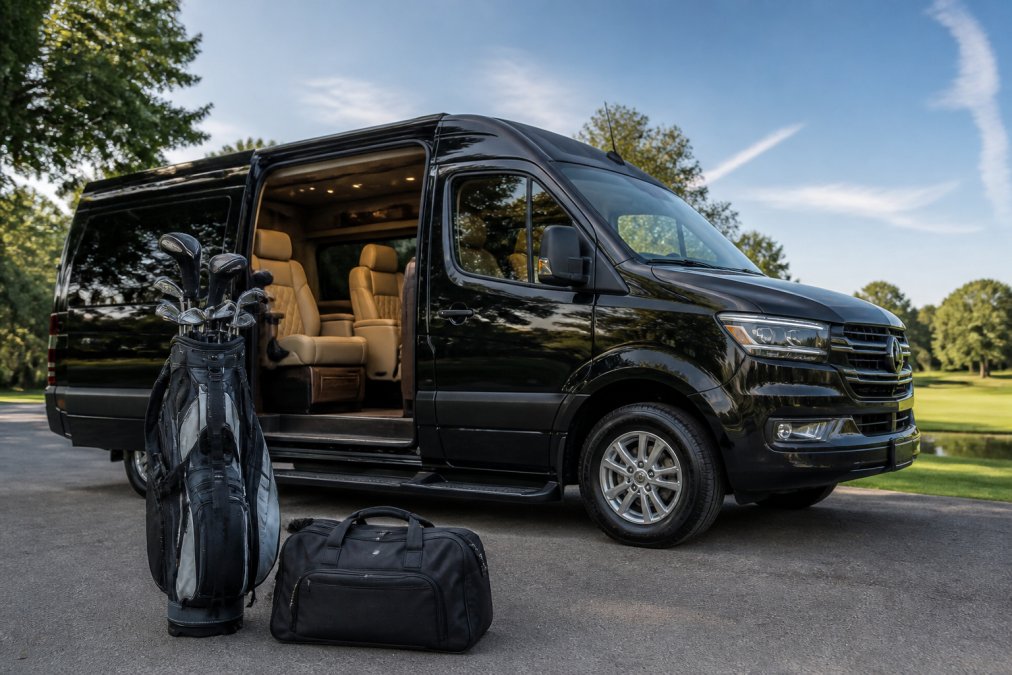
Golfers who travel seriously know the airport bag-check shuffle all too well: oversize fees, damaged shafts, delayed luggage, and rental cars that barely fit two bags in the trunk. The best custom vans for golf trips solve every one of those problems in a single purchase. At GOLF Cruiser, we’ve spent over 45 years building purpose-driven luxury vans for exactly this kind of traveler. Below, we cover the angles most buyers never think to ask about until after they’ve signed the paperwork.
Quick Picks:
- Best Overall: GOLF Cruiser, purpose-built mobile clubhouse on proven GM platforms
What Makes a Custom Van Right for Golf Trips
A custom van built for golf trips combines club-friendly storage, ergonomic seating, and road-trip comfort in a single package. Most golfers start this search after bad experiences with SUVs, RVs, or rental shuttles. SUVs hold only two to three bags with rear seats folded. RVs solve space but create parking problems at courses. A well-configured conversion van threads that needle: it parks in a standard space, drives like a large truck, and carries a full team’s gear without compromise.
Five criteria separate good golf vans from great ones:
- Club storage geometry: Bags must stand upright without pressure on shafts or club heads
- Climate control: Temperature swings damage grips, graphite shafts, and leather head covers
- Seating capacity: Layouts range from 6 to 9 passengers depending on your travel group
- Off-grid power: Wi-Fi, entertainment, and refrigeration require reliable electrical systems
- Chassis reliability: The platform determines parts availability, dealer coverage, and maintenance costs
Best Van Platforms for Custom Conversions
Choosing the right chassis is the most consequential decision in any custom van build. The platform determines cargo volume, ride quality, fuel costs, and serviceability nationwide.
Chevrolet and GMC Full-Size Vans
The Chevrolet Express and GMC Savana offer the most conversion-friendly platforms in the American market. Both share the same body architecture, providing decades of aftermarket support, widely available parts at every GM dealership, and a proven V8 powertrain that handles heavy custom interiors without strain. High-roof variants offer standing room that makes loading and unloading bags significantly easier.
Mercedes-Benz Sprinter
The Sprinter is a platform often used for premium team travel builds. Its extended cargo volume, turbodiesel efficiency, and high-roof configuration suit collegiate sports programs and tournament teams that log serious miles. The tradeoff is dealer coverage: Sprinter service centers concentrate in metro areas, creating headaches on rural golf trips.
Ford Transit
The Ford Transit offers the broadest configuration range of any van on the market, available in three roof heights, three body lengths, and multiple wheelbase options. According to EPA fuel economy ratings for commercial vans, Transit diesel variants consistently outperform comparable gasoline competitors on highway miles per gallon. The weakness for golf-specific builds is cargo floor width, which is narrower than GM platforms and can complicate custom storage designs for multiple full-size bags.
Top Custom Vans for Golf Trips: Compared
The builds below represent strong options currently available, covering everything from purpose-built golf luxury to mobile workshop functionality.
|
Van / Build |
Chassis |
Passenger Capacity |
Golf Storage Focus |
Best For |
|---|---|---|---|---|
|
GOLF Cruiser |
Chevy/GMC |
6-9 |
Purpose-built club storage |
Golfers, families, teams |
1. GOLF Cruiser, Purpose-Built Mobile Clubhouse
GOLF Cruiser is a top pick for the best custom vans for golf trips because it is designed exclusively around the golfer’s travel experience, not adapted from a generic luxury or team-travel platform.
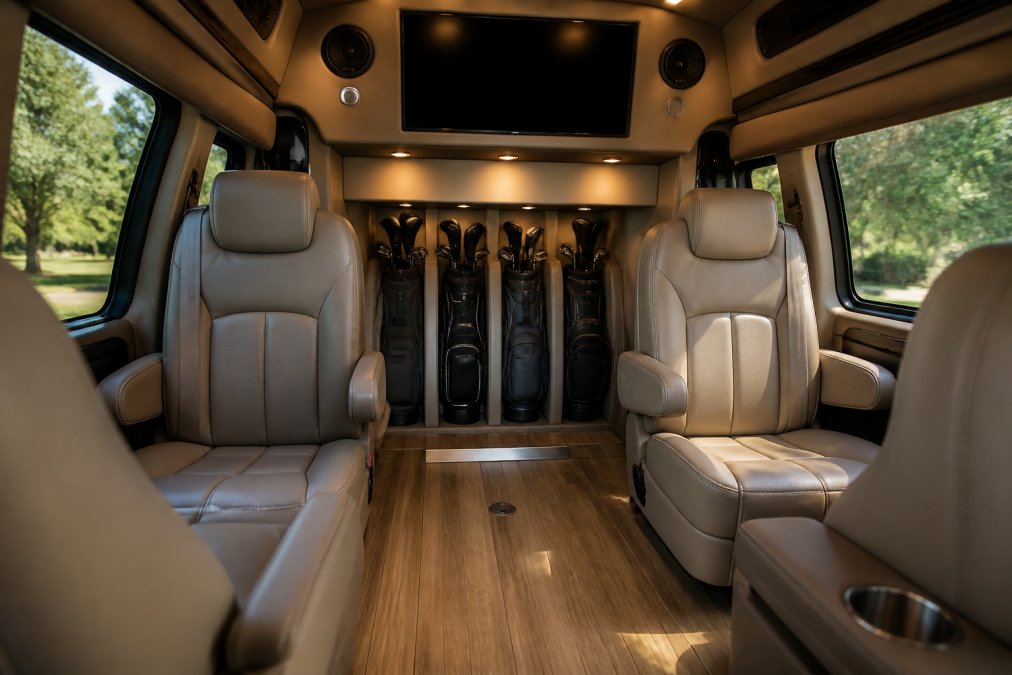
Built on reliable Chevrolet and GMC platforms by American craftspeople with over 45 years of conversion experience, each GOLF Cruiser functions as a mobile clubhouse. Layouts accommodate 6 to 9 passengers with plush leather seating featuring lumbar support and power recliners. The custom golf club storage system keeps bags secure and organized during transit, protecting equipment from damage. The interior includes Wi-Fi, HDTV, charging ports, and entertainment systems that turn drive time into strategy time for tournament groups. The GM platform keeps maintenance straightforward at any dealership nationwide.
Pros:
- Golf-specific interior design, not a generic conversion
- Chevy/GMC platform means nationwide dealer service
- Flexible 6-9 passenger layouts for different group sizes
- Potential Section 179 tax deduction for business buyers
- Over 45 years of American craftsmanship behind every build
Cons:
- Pricing requires a custom quote; contact GOLF Cruiser directly
- Limited to GM platforms (not available on Sprinter or Transit)
Custom Van Storage Solutions for Golf Clubs
Custom van storage solutions for golf clubs are the single most important functional specification in any golf travel van build. Getting this wrong means damaged equipment, frustrated passengers, and a van that works against you rather than for you.
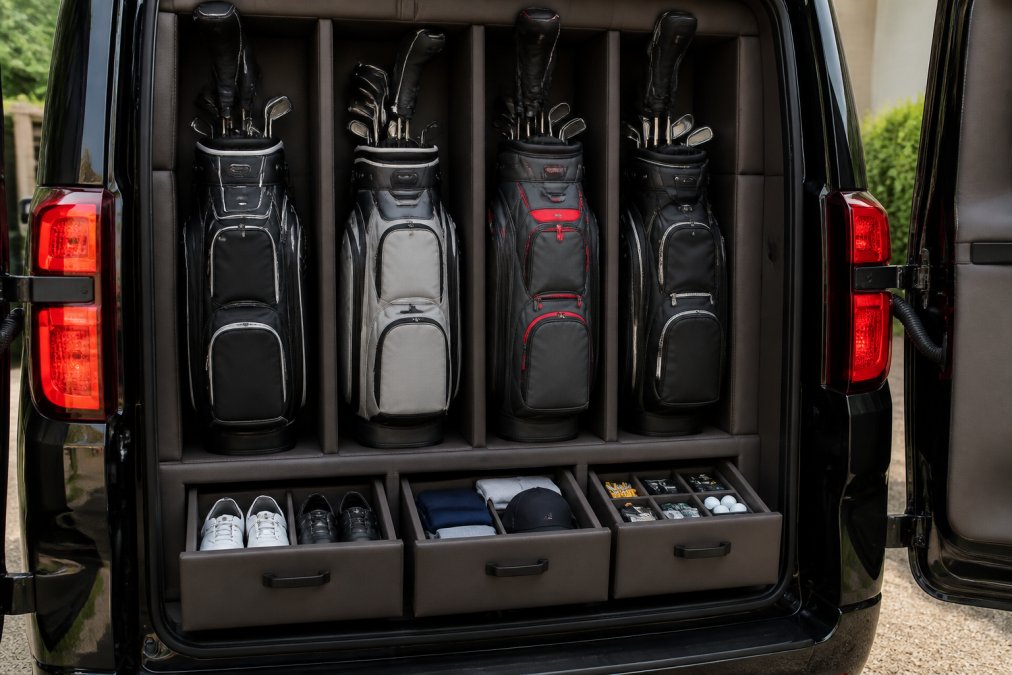
The most effective designs mount bags upright in dedicated slots with padded dividers between each position. This prevents shaft contact, protects club heads, and allows quick individual access without unloading the entire cargo area. Under-slot drawers handle shoes, gloves, range finders, and accessories. According to PGA of America’s equipment care guidelines, temperature and pressure fluctuations are among the leading causes of grip deterioration and shaft warping during transport. Properly configured storage that keeps bags upright and separated directly addresses both risks.
Securing High-End Gear: Locks, Padding, and Climate Control
High-end golf equipment represents a serious investment, and a van parked overnight at a resort or tournament venue is a target. The best custom builds address security at three levels: physical locking mechanisms on cargo doors, interior cable locks that anchor individual bags to the storage frame, and GPS tracking integrated into the vehicle’s electrical system.
Padding matters as much as locks. Graphite shafts flex and fatigue under repeated vibration. Padded slot dividers and foam-lined drawer interiors absorb road vibration before it reaches club heads and shafts. Climate control in the cargo area protects premium clubs from extreme heat and cold that warp composite shafts and soften epoxy bonding at the hosel.
Long-Term Maintenance of Golf Equipment Stored in a Van
Storing clubs in a van long-term requires humidity control as the primary concern: condensation from temperature cycling creates moisture that accelerates rust on steel components and promotes mold growth on leather grips and head covers. A compact desiccant dehumidifier mounted in the cargo area solves this at minimal cost. Monthly inspections of grip condition, shaft alignment, and head cover integrity catch problems before they become expensive.
Tax Benefits of Business-Use Conversion Vans
The Section 179 deduction is a legitimate and significant financial consideration for business owners purchasing a custom conversion van. Under IRS Section 179 deduction rules for business vehicles, businesses can deduct the full purchase price of qualifying vehicles in the year of purchase rather than depreciating the cost over multiple years, subject to annual limits and business-use percentage requirements.
A conversion van used for client entertainment, tournament travel, or team transport can qualify as a business vehicle if it meets the IRS’s definition and the business-use percentage threshold. Confirm specifics with your accountant before purchase.
Golf Course Parking, Accessibility, and On-Site Logistics
Most private and resort courses have standard parking infrastructure designed for passenger cars and SUVs. High-roof vans clear standard parking structures without issue, but some older resort garages have clearance restrictions that catch buyers off guard.
The practical advantages of a conversion van over an RV become obvious at the course. A full-size conversion van fits in a standard parking space, uses the same fueling infrastructure as any truck, and does not require hookups or designated RV areas. For golfers with mobility limitations, the van’s step-in height and interior standing room make loading and unloading clubs significantly easier than trunk-loading an SUV. According to ADA guidelines on accessible vehicle design, vehicles configured for accessibility should provide adequate headroom, stable entry surfaces, and secure equipment storage that does not require bending or overhead lifting. Purpose-built golf vans with high-roof configurations and rear-access storage naturally align with these principles.
Renting vs. Owning a Custom Golf Van: The Real Cost Breakdown
Renting makes financial sense for golfers who travel fewer than four times per year with their own equipment. For everyone else, the math shifts quickly toward ownership, particularly when Section 179 treatment is available.
The honest cost comparison looks like this:
|
Factor |
Renting |
Owning |
|---|---|---|
|
Upfront cost |
None |
Full purchase price |
|
Per-trip flexibility |
High |
Low (fixed asset) |
|
Equipment security |
Variable |
Controlled |
|
Tax advantage |
None |
Section 179 eligible |
|
Long-term cost (6+ trips/year) |
Accumulates significantly |
Depreciates with use |
|
Customization |
None |
Fully tailored |
|
Availability |
Subject to inventory |
Always available |
The customization argument is underrated. A rented van is configured for generic group transport. A purpose-built golf van is configured for your equipment, your group size, and your specific travel patterns. For business owners, the Section 179 calculation can change the ownership math substantially. Six trips per year with four golfers, full equipment, and two nights of accommodation each time adds up to a significant annual travel budget. A custom van eliminates bag fees, rental car costs, and equipment damage claims while adding the comfort of a controlled, familiar travel environment.
|
Van / Build |
Chassis |
Best For |
Golf Storage |
Passenger Capacity |
|---|---|---|---|---|
|
GOLF Cruiser |
Chevy/GMC |
Purpose-built golf travel |
Custom club slots, purpose-built |
6-9 |
Choosing the right van for serious golf travel comes down to one question: are you buying a vehicle that happens to carry clubs, or a vehicle built around carrying clubs? For most golfers reading this, the answer is the latter. GOLF Cruiser is purpose-built for exactly that use case, combining hand-crafted American construction, flexible 6-9 passenger layouts, and custom golf club storage on the proven reliability of GM platforms. Contact GOLF Cruiser today to discuss your layout, your travel patterns, and your Section 179 eligibility with a team that has been building these vehicles for over 45 years.
Frequently Asked Questions
Which custom vans are most comfortable for long-distance golf trips?
Vans built on full-size Chevrolet, GMC, or Mercedes-Benz Sprinter platforms offer comfort for long drives. Look for plush leather seating with lumbar support, power recliners, and climate control. Purpose-built golf vans like GOLF Cruiser go further by pairing that passenger comfort with dedicated club storage, so you are not sacrificing cargo space to seat your group. Passenger counts range from 6 to 9 depending on the layout you choose.
Are custom vans better than RVs for golf tournament travel?
For many golfers, yes. A custom van is easier to park at a golf course or resort, costs less to fuel, and does not require the same level of maintenance as a full RV. You also avoid the hassle of campsite hookups and size restrictions on resort parking lots. The tradeoff is that you give up an onboard bathroom and sleeping quarters, but for day trips and hotel-based tournament travel, a purpose-built golf van handles the job more practically.
How do you organize golf clubs and gear in a custom van?
The most effective setups use vertical bag slots in the rear cargo area, often with padded dividers to prevent clubs from shifting during transit. Dedicated drawers beneath the bag storage hold shoes, gloves, and accessories. High-end builds add lockable compartments for valuables and climate-controlled sections to protect grips and shafts from heat damage. GOLF Cruiser’s custom van storage solutions for golf clubs are designed specifically around these needs rather than adapted from generic cargo layouts.
Can a custom conversion van qualify for a Section 179 tax deduction?
A conversion van used primarily for business purposes can qualify for a Section 179 deduction, which allows you to deduct the full purchase price in the year it is placed in service rather than depreciating it over time. The vehicle must be used more than 50 percent for business to qualify, and the deduction is subject to annual IRS limits. Always confirm eligibility with a qualified tax professional before purchasing, as individual circumstances vary significantly.
What is the most reliable platform for a custom golf van build?
The Chevrolet Express and GMC Savana remain proven platforms for full-size van conversions in the United States, with decades of parts availability and straightforward servicing at dealerships nationwide. The Mercedes-Benz Sprinter offers more interior height and cargo volume, making it a strong choice for teams carrying 10 or more bags. The Ford Transit splits the difference with better fuel economy. Your best platform depends on group size, storage requirements, and how far you typically drive between courses.