
Table of Contents
- What Makes a Vehicle Ideal for Golf Road Trips
- Luxury Golf Vans for Sale: The Purpose-Built Option
- Best SUV for Golf Clubs and Push Carts
- How to Plan a Multi-Course Golf Road Trip
- Van vs. SUV: Which Is Right for Your Golf Trips
- Safety Features for Highway Driving and Long-Distance Travel
- Frequently Asked Questions
Last Updated: September 3, 2026
What Makes a Vehicle Ideal for Golf Road Trips
A vehicle designed for golf road trips must balance three competing demands: genuine cargo capacity for golf bags, push carts, luggage, and coolers without compromising passenger comfort; comfort features that make long-distance travel enjoyable; and real-world manageability, easier to park than an RV, simpler to maintain than a motorhome.
The vehicles that excel share specific characteristics: interior dimensions that maximize usable space, climate control systems for long drives, storage configurations designed around actual gear needs, and luxury appointments that make the journey as enjoyable as the destination.
Luxury Golf Vans for Sale: The Purpose-Built Option
GOLF Cruiser: Hand-Built American Craftsmanship
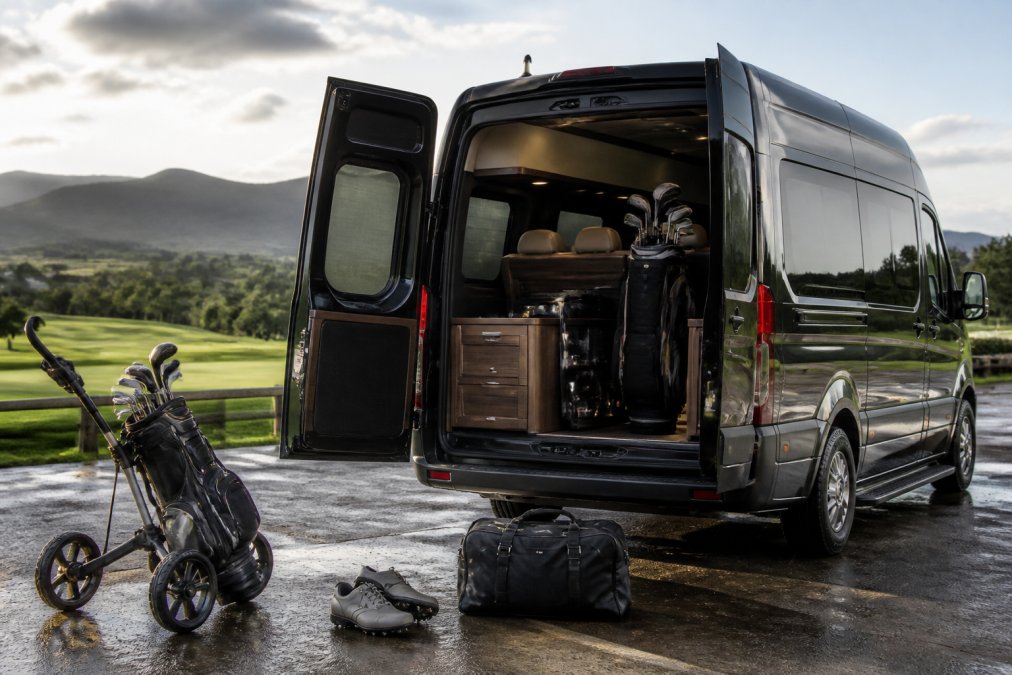
GOLF Cruiser represents the most direct solution to the golf road trip challenge. Built on proven Chevrolet and GMC platforms by American craftspeople with over 45 years of experience in full-size vehicle conversions, these hand-built luxury vans are engineered specifically for golfers who refuse to compromise on capability or comfort.
Every design decision prioritizes the golf lifestyle. Custom club storage keeps equipment secure and organized without wrestling bags into awkward spaces. Flexible interior layouts accommodate families, foursomes, or full teams with coaching staff, with seating for six to nine passengers. Plush leather seating includes lumbar support and power recliners for long-distance comfort.
Technology integration reflects luxury standards: integrated Wi-Fi, HDTV, charging ports, and infotainment systems that rival premium SUVs.
GOLF Cruiser vans built on Chevrolet and GMC platforms benefit from dealer network support nationwide. Maintenance and repairs happen at standard service centers rather than specialized shops, which matters when traveling to unfamiliar regions for tournaments.
The Section 179 tax advantage deserves specific attention. If you use the vehicle for business purposes, transporting your golf team, organizing tournaments, or conducting client entertainment, you may qualify for accelerated depreciation deductions under Section 179 of the Internal Revenue Code. This is a legitimate tax strategy that business owners should discuss with their accountant. Tax implications vary based on your specific business structure and use case, so verify with your tax professional before making the investment decision.
Cargo Capacity and Club Storage
The defining advantage of a purpose-built golf van is how it handles equipment. Custom club storage compartments secure golf bags easily with room remaining for push carts, coolers, and luggage. Unlike trunk storage where bags get compressed and tangled, these compartments keep everything organized and accessible.
Push cart storage represents another design advantage. GOLF Cruiser’s layout accommodates push carts in their functional configuration, eliminating the setup-teardown cycle that drains time during multi-course trips. Built-in compartments keep coolers, snacks, beverages, and personal items organized and accessible.
Interior Comfort and Passenger Legroom
Long-distance comfort separates adequate vehicles from those that make the journey enjoyable. GOLF Cruiser delivers genuine legroom with seats positioned to maximize stretch-out space. Power recliners let passengers adjust position without disturbing others, and lumbar support prevents back stiffness from highway driving.
Separate zone climate control lets the driver maintain focus while passengers adjust their comfort independently. Integrated HDTV and Wi-Fi connectivity keep your group entertained during lunch breaks or evening downtime. The cargo floor design accommodates equipment without creating an uneven walking surface inside the vehicle.

Best SUV for Golf Clubs and Push Carts
Cadillac Escalade ESV: Maximum Luxury and Space
The Cadillac Escalade ESV represents the pinnacle of traditional SUV design for golf travel. The extended wheelbase delivers maximum cargo capacity, up to 142.8 cubic feet with rear seats folded, accommodating golf equipment for a full foursome plus luggage for multi-day trips (cadillac.com).
Luxury appointments include a 55-inch curved OLED display, AKG Studio 3D audio system, and heated, ventilated, massaging seats that address highway travel demands. The 6.2-liter V8 engine provides genuine power for highway passing and mountain driving. Super Cruise hands-free driving reduces driver fatigue on interstate stretches. Comprehensive driver assistance systems, adaptive cruise control, lane keeping assist, collision avoidance, reduce mental load during extended driving.
The tradeoff is fuel economy. The V8 engine and extended wheelbase require planning around gas stops during 400-500 mile trips between courses.
GMC Yukon XL: Versatility and Value
The GMC Yukon XL delivers substantial cargo capacity, up to 121.7 cubic feet with rear seats folded, at a significantly lower price point (gmc.com). Three-row seating gives flexibility for foursomes traveling with spouses or friends without forcing anyone into the far back cargo area.
Powertrain options reflect different priorities: a diesel engine for efficiency or a V8 for power. Tri-Zone Automatic Climate Control keeps different passengers comfortable. Air Ride Adaptive Suspension smooths long-distance driving on varied road surfaces. At a starting price significantly below the Escalade, you get effective golf equipment handling without the luxury premium.
How to Plan a Multi-Course Golf Road Trip
Vehicle Selection for Your Itinerary
Count your total cargo volume: golf bags, push carts, luggage, coolers, and personal items. Lay out equipment on a garage floor and measure it against vehicle cargo specifications. This prevents discovering mid-trip that your chosen vehicle doesn’t accommodate your gear.
Evaluate driving distance and frequency. If covering 300-400 miles between courses, fuel efficiency becomes a real cost factor. If driving 500+ miles daily, comfort features that reduce driver fatigue become critical to safety and enjoyment.
Consider your travel companions and their comfort expectations. Assess parking and maneuverability requirements. Resort parking lots and course access roads vary dramatically. A full-size van requires different approach angles than an SUV.
Don’t underestimate the importance of vehicle familiarity when planning multi-course trips. A vehicle you’ve driven extensively is easier to manage in unfamiliar locations than a rental you’re driving for the first time.
Storage Organization and Gear Management
Develop a loading system before your trip. Assign specific storage locations and take a photo of your loaded vehicle to replicate the configuration at each course. Create a gear checklist specific to your trip and verify equipment before leaving each course.
Use compartmentalization strategically: dedicated storage for clubs, separate cooler areas for beverages, personal luggage in its own space. For tournament organizers, consider a portable filing system for strategy materials and scorecards.
Fuel Efficiency and Long-Distance Comfort
Plan fuel stops strategically. Know your vehicle’s actual fuel economy and calculate your range rather than guessing. Build comfort breaks into your driving schedule every two hours for 15-minute stretches.
Optimize climate control settings for long-distance comfort. Stock your cooler strategically with easily accessible water and simple snacks that sustain energy without creating distraction.
Van vs. SUV: Which Is Right for Your Golf Trips
Maneuverability and Parking Ease
A full-size SUV like the Cadillac Escalade ESV maintains the fundamental form factor of a traditional automobile, making navigation familiar. A van conversion like GOLF Cruiser presents a different profile requiring more intentional maneuvering but often providing better visibility through its higher driving position and larger windows.
Test drive both form factors in actual parking situations before committing. Navigate tight parking lots, back into standard spaces, and drive through narrow resort access roads to reveal which form factor suits your comfort level.
Maintenance and Reliability
The Cadillac Escalade ESV and GMC Yukon XL are standard production vehicles with dealer networks nationwide. Maintenance happens at familiar service centers using standard parts.
A GOLF Cruiser built on a Chevrolet or GMC platform benefits from the same dealer network for mechanical systems. The engine and transmission receive service at any Chevrolet or GMC dealership, though custom interior components require specialists who understand the specific build. This offers flexibility compared to RVs requiring specialized service facilities.
Both options offer minimal reliability differences. Plan maintenance costs differently: standard SUVs follow predictable patterns, while custom vans include specialized components. Discuss maintenance expectations with the builder before purchasing.
Tax Advantages for Business Owners
Section 179 of the Internal Revenue Code allows businesses to deduct the full cost of certain assets in the year they’re placed in service (irs.gov). A vehicle used for business purposes more than 50% of the time qualifies. If you’re transporting your golf team to tournaments or entertaining clients at golf outings, that’s business use.
GOLF Cruiser’s classification as a luxury van built on a commercial-grade chassis can make it eligible for Section 179 treatment in ways a standard SUV might not qualify. However, eligibility depends on your specific business structure and documented use.
Consult your accountant before making the purchase decision. Get tax qualification answers in writing. Don’t buy based on assumed tax benefits without professional verification.
Safety Features for Highway Driving and Long-Distance Travel
The Cadillac Escalade ESV includes comprehensive driver assistance systems: adaptive cruise control, lane keeping assist, collision avoidance, and Super Cruise hands-free driving. The GMC Yukon XL delivers similar safety architecture through its Pro Safety suite.
A GOLF Cruiser built on a Chevrolet or GMC platform inherits the safety features of its base vehicle. Long-distance safety extends beyond mechanical systems: proper seat positioning reduces fatigue affecting driving ability, climate control prevents drowsiness, entertainment systems reduce boredom-induced inattention.
Plan your driving schedule realistically. Eight hours of highway driving is the maximum for safe operation. If your trip requires more than eight hours daily, plan an overnight stop. The cost of a hotel room is trivial compared to fatigue-related accident risk.
Choosing the best vehicle for golf road trips requires understanding what matters for your specific travel patterns. If you’re traveling with a foursome multiple times yearly, covering significant distances, and prioritizing ease of equipment management, a purpose-built solution like GOLF Cruiser delivers advantages that standard SUVs cannot match. The custom club storage, flexible interior layouts, and golf-specific design eliminate compromises that come with general-purpose vehicles.
For business owners using the vehicle for tournament organization, team transportation, or client entertainment, GOLF Cruiser’s potential Section 179 tax qualification adds financial advantages worth exploring with your accountant. The hand-built American craftsmanship and over 45 years of expertise in vehicle conversions ensure you’re investing in a vehicle engineered specifically for how golfers actually travel. Contact GOLF Cruiser today to discuss your specific travel requirements and explore how a custom-built luxury van can transform your golf road trip experience.
Frequently Asked Questions
Q: What cargo space do I need for a foursome’s golf bags and luggage?
A: A foursome typically requires 80-120 cubic feet of cargo space. Golf bags occupy roughly 8-10 cubic feet per person, while luggage adds another 20-30 cubic feet depending on trip length. Luxury vans like GOLF Cruiser offer ample cubic feet with custom storage configurations. SUVs like the Cadillac Escalade ESV provide up to 142.8 cubic feet. Vertical storage solutions maximize space efficiency for club bags and equipment.
Q: Are luxury golf vans for sale better than SUVs for multi-course road trips?
A: Luxury golf vans offer more interior space, easier loading for those with mobility concerns, and purpose-built storage designed specifically for clubs and gear. They’re easier to park and maintain than RVs. SUVs provide better fuel economy and higher seating position. For frequent golfers traveling with groups, custom vans can deliver superior comfort and functionality. Your choice depends on trip frequency, budget, and whether you prioritize space or fuel efficiency.
Q: Can I get a tax write-off for a golf van under Section 179?
A: Section 179 allows businesses to deduct the full purchase price of qualifying vehicles. A golf van may qualify if it’s used primarily for business purposes, such as transporting clients, team members, or tournament equipment. Consult your accountant before purchase, as personal use disqualifies the deduction. GOLF Cruiser vehicles built on qualifying platforms may be eligible, but individual circumstances vary significantly.
Q: What features should I prioritize when choosing a vehicle for golf road trips?
A: Prioritize cargo capacity, interior storage configuration, passenger comfort with adequate legroom, climate control, and ease of loading. For longer trips, fuel efficiency and highway safety features matter significantly. Ground clearance helps with rough resort parking lots. Vertical and horizontal storage options accommodate different club bag orientations. Infotainment systems keep passengers entertained during drives. Custom solutions like those in GOLF Cruiser vehicles address golf-specific needs directly.
This article was written using GrandRanker