
Table of Contents
- Why Golfers Seek Alternatives to HQ Custom Design
- Luxury Golf Travel Vans: The Mobile Clubhouse Standard
- Custom Golf Club Storage Solutions for Teams and Travel
- Tax Benefits for Business-Use Golf Vehicles Under Section 179
- How GOLF Cruiser Compares to Other Custom Van Builders
- Long-Term Maintenance and Resale Value of Custom Golf Vans
- Conclusion
- Frequently Asked Questions
Last Updated: September 13, 2026
Why Golfers Seek Alternatives to HQ Custom Design
Golfers searching for HQ Custom Design alternatives for golfers usually share one frustration: they want a vehicle built around the game, not a camper with a golf bag tossed in the back. At GOLF Cruiser, we’ve spent over 45 years converting full-size vans, and the pattern is consistent. The buyer isn’t shopping for transportation. They’re shopping for a mobile clubhouse.
That distinction matters more than most builders admit. A standard luxury van conversion starts from a camping or shuttle template, then adds cupholders. A golf-specific build starts from the equipment: club storage, seating for a foursome or full team, and a layout that works as a tournament command center. When weighing HQ Custom Design alternatives for golfers, the real question isn’t which builder is cheaper, it’s which builder understands why you’re buying.
Below, we break down what separates a genuine golf travel van from a dressed-up passenger vehicle, how business-use vehicles may qualify for Section 179 deductions, and where customization pays off long term.
The core decision isn’t brand versus brand. It’s purpose-built versus adapted. A van designed around club storage and team seating solves problems a converted camper never will.
Luxury Golf Travel Vans: The Mobile Clubhouse Standard
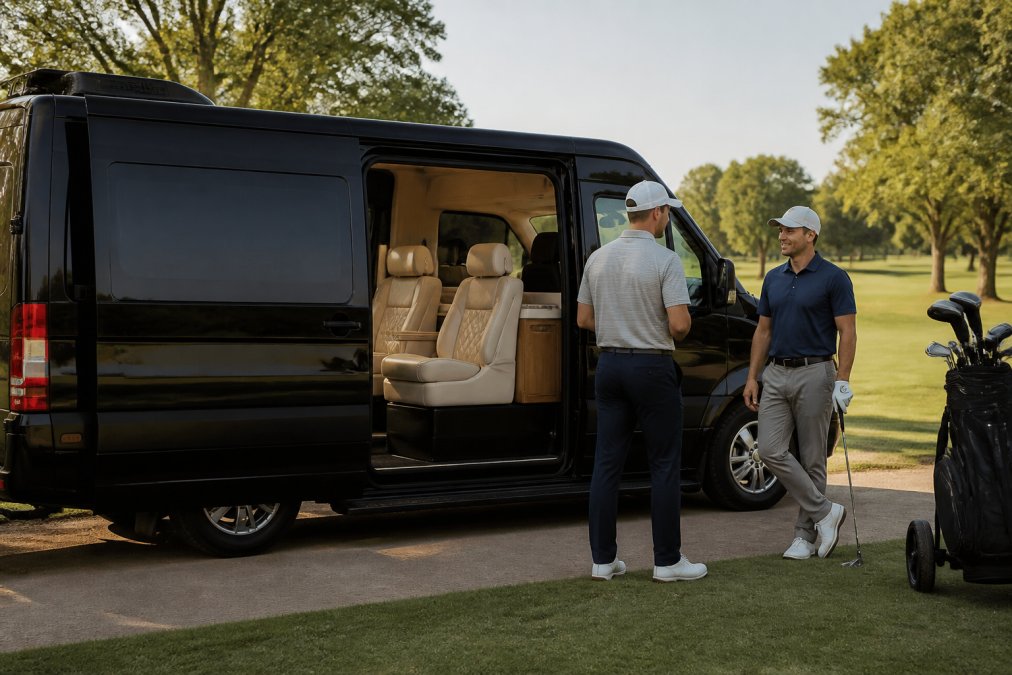
A luxury golf travel van is a hand-built vehicle designed specifically for transporting golfers, their equipment, and their team in comfort, a mobile clubhouse rather than simple transportation. That definition is the dividing line in this category.

GOLF Cruiser builds on Chevrolet and GMC platforms, which matters practically: parts, service, and drivability are familiar to any dealer network. A purpose-built golf van should be easier to park, drive, and maintain than an RV, not a specialty vehicle that becomes a headache the first time something needs attention.
What separates the best options in this space comes down to three things:
- Club storage designed in, not bolted on: Dedicated, secure storage for full sets and team gear.
- Flexible seating: Layouts for a foursome, a family, or a full team, reconfigured as needed.
- Maneuverability: More interior space than an SUV, without the footprint of a motorhome.
According to IRS Publication 946 on business property depreciation, how a vehicle is used and configured affects how it’s treated for tax purposes, a point we return to below.
Custom Golf Club Storage Solutions for Teams and Travel
Custom golf club storage solutions are built-in systems that secure and organize clubs, bags, and tournament gear during transport, replacing the loose, rattling arrangements common in standard SUVs. For team captains and coaches, this feature justifies the entire purchase.
Picture a tournament weekend with six players. Off-the-shelf storage means bags stacked against seats, clubs shifting on turns, and a scramble at the course over whose bag is whose. A built-in system gives every bag a home, protects gear, and turns loading into minutes instead of a wrestling match.
If you travel with a team, prioritize layouts that keep clubs accessible without unloading everything else. The best storage designs let you pull one bag without disturbing the rest. Ask any builder to demonstrate this before you commit.
This is where a genuine golf van separates from a generic luxury conversion. Many builders treat storage as an afterthought, adding a rack to a camper cabin. Purpose-built designs start with the clubs.
Tax Benefits for Business-Use Golf Vehicles Under Section 179
Section 179 is a provision of the U.S. tax code that allows businesses to deduct the full purchase price of qualifying vehicles and equipment in the year they’re placed in service, rather than depreciating them over several years (irs.gov). For business owners, it’s often the biggest factor in the buy-versus-fly decision.
Here’s the honest version, because the marketing around this gets sloppy. Qualification depends on how the vehicle is used, its weight and configuration, and your specific business circumstances. A vehicle used predominantly for business may qualify. A personal vehicle generally won’t. The IRS Section 179 deduction guidance lays out the requirements, and the details are specific.
GOLF Cruiser vehicles may qualify for Section 179 write-offs for business owners, but qualification is not automatic or universal. Talk to your accountant before you buy, not after. A van that fits your business use can be a legitimate deduction; a van used for weekend rounds is a personal expense.
Never buy a vehicle assuming it will qualify for Section 179. Usage, weight, and configuration all matter, and an accountant’s review before purchase is the only way to know your actual position. Discovering it doesn’t qualify after the fact is an expensive lesson.
How GOLF Cruiser Compares to Other Custom Van Builders
GOLF Cruiser is a hand-built luxury van manufacturer with over 45 years of full-size conversion experience, building golf-specific vehicles on Chevrolet and GMC platforms. Most general van builders start from camping or shuttle templates and adapt them. GOLF Cruiser starts from the golfer.
Here’s how the approaches differ:
| Builder Type | Design Starting Point | Club Storage | Seating Flexibility | Best For |
|---|---|---|---|---|
| GOLF Cruiser | Golfer’s needs first | Built-in, team-ready | Foursome to full team | Golfers, teams, tournament use |
| General luxury van converters | Camper or shuttle template | Often added on | Fixed layouts | Mixed-use luxury travel |
| Standard SUV | Passenger vehicle | Loose bags | Factory seating only | Casual, solo travel |
| Class B RV | Camping | Minimal | Fixed camper layout | Overnight camping trips |
The trade-off is real: a GOLF Cruiser costs more upfront than a standard passenger vehicle. But it delivers more interior space for gear and people, luxury features tailored to golfers rather than campers, and mobile clubhouse functionality a converted camper simply lacks. For a golfer who travels frequently with equipment and company, the math favors purpose-built.
What Actually Separates Builders: The Component Checklist
When you compare builders side by side, the marketing language blurs together. The differences show up in components. Ask every builder the same questions:
- Platform and chassis: Which chassis is the build based on, and is it a cutaway, a full body-on-frame van, or a unibody platform? Body-on-frame platforms like the Chevrolet Express and GMC Savana tolerate heavy interior builds and remain serviceable at any dealer that handles those brands. Unibody platforms ride better but have lower payload ceilings.
- Payload and GVWR: Ask for the gross vehicle weight rating and the remaining payload after the build. A loaded golf van with six players, six bags, and gear can add 1,200 to 1,800 pounds. If the builder can’t quote a payload number, that’s a red flag.
- Electrical system: Is the house electrical system lithium or AGM? What’s the inverter capacity? A tournament command center with monitors, chargers, and a refrigerator needs a real power budget, not a single auxiliary battery.
- Climate control: Does the rear cabin have independent climate control, or does it rely on the front HVAC? Rear passengers in a full-size van will notice the difference within the first hour.
- Storage engineering: Are club racks load-rated and anchored to the chassis or the interior shell? Bolted-on racks rattle loose; integrated racks don’t.
- Warranty structure: What’s covered, for how long, and who performs the work, the builder or a dealer network?
DIY vs Professional Customization: What You Can Do Yourself
One of the biggest market gaps is honest guidance on which customizations a golfer can handle at home and which require a professional shop. Here’s the practical split:
Safe to do yourself:
- Grip changes (regripping is a basic skill with a vise, tape, solvent, and a hook blade)
- Paint fill on club heads (enamel paint, a toothpick, and acetone cleanup)
- Basic interior organization, aftermarket bag straps, cargo nets, and removable dividers
- Cosmetic touches like floor mats, seat covers, and console organizers
Requires a professional:
- Any structural interior build, cabinetry, seating mounts, or load-bearing racks
- Electrical work, inverters, lithium banks, and 12-volt circuits carry real fire risk if done wrong
- HVAC modifications, refrigerant handling is regulated and requires certified equipment
- Suspension or chassis changes to handle added weight
- Any work that could affect the vehicle’s warranty or its classification for tax purposes
Before you buy any van, ask the builder for a written list of what’s covered under warranty and what voids it. Most warranty disputes start with an owner who added a DIY electrical component to a professionally built system.
How to Choose the Right Customization Level
Not every golfer needs a full tournament build. Match the build to how you travel:
- Solo or twosome, occasional travel: A well-organized SUV or a lightly customized van with a single club rack and upgraded seating is usually enough.
- Regular foursome, weekend trips: Prioritize seating comfort, secure bag storage for four, and a rear climate zone.
- Full team or tournament use: You need team-scale storage, a real power system, and a layout that lets players load and unload without rearranging the cabin.
- Business use: If the van supports a business, document how it’s used and configured, because that documentation matters for any deduction you plan to claim.
The right level is the one you’ll actually use every week, not the one that looks best in a showroom.
Long-Term Maintenance and Resale Value of Custom Golf Vans
Custom finishes and built-in systems require attention, and heavy personalization can affect resale value. This is the part most buyers don’t think about until year three, and almost no guide covers it.
Because GOLF Cruiser builds on Chevrolet and GMC platforms, mechanical service stays straightforward at any dealer handling those brands. The custom interior is where maintenance discipline matters.
A Practical Maintenance Schedule for Custom Interiors
Most custom van interiors mix upholstery, cabinetry, and finish surfaces, each with its own care rhythm:
- Weekly: Wipe down high-touch surfaces, door handles, seat bolsters, and console tops. Grit embedded in upholstery acts like sandpaper over time.
- Monthly: Vacuum seams and crevices where golf course sand and grass clippings collect. Check that club rack anchors and cabinet latches are still tight.
- Quarterly: Condition leather or vinyl seating. Inspect any painted or powder-coated surfaces for chips, and touch them up before moisture gets underneath.
- Annually: Have the electrical system inspected, battery health, inverter connections, and any 12-volt circuits. Have the chassis serviced on the manufacturer’s schedule regardless of how few miles the van has.
Preserving Custom Paint Fills and Specialized Finishes
Paint fill on club heads and custom exterior graphics or pinstriping degrade first if ignored. The enemies are UV, abrasion, and solvents:
- Wash with a pH-neutral soap. Dish soaps and degreasers strip wax and dull clear coats.
- Apply a quality wax or ceramic sealant every few months to exterior finishes. This is the single cheapest way to preserve resale appearance.
- Avoid automatic brush car washes. They’re the fastest way to scratch custom graphics and dull paint fill.
- For interior painted or powder-coated surfaces, use a damp microfiber cloth, not abrasive cleaners.
- Store the van out of direct sun when possible. UV is the slowest and most expensive form of damage.
Never use acetone, lacquer thinner, or aggressive solvents on custom paint fill or graphics. What removes the smudge also removes the finish. Test any cleaner on an inconspicuous spot first.
How Customization Affects Resale Value
On resale, the picture is mixed. A well-maintained, tastefully customized golf van appeals to a specific buyer: another golfer who wants exactly what you built. Heavy personalization, unusual colors, or layouts built for one person’s habits narrow that audience.
A few patterns hold across the market:
- Neutral, functional builds hold value best. A layout that works for a foursome or a team appeals to the widest pool of golf buyers.
- Documented maintenance helps. Service records, warranty paperwork, and receipts for professional work reassure buyers that the build was cared for.
- Extreme personalization narrows the pool. Bold exterior colors, monogrammed interiors, or one-of-a-kind layouts can take longer to sell and may sell below comparable neutral builds.
- Mechanical familiarity helps. Because the chassis is a mainstream Chevrolet or GMC platform, buyers can verify service history and parts availability easily, a real advantage over niche chassis.
Build for your use, not for a hypothetical future buyer. A golf van customized thoughtfully holds value with golfers. One customized to one person’s quirks holds value with one person. Keep records, keep finishes protected, and the van will find its next owner.
Conclusion
The hardest part of shopping HQ Custom Design alternatives for golfers isn’t finding builders. It’s finding one that starts from the game rather than adapting a camper. That’s the difference between a vehicle that happens to carry clubs and one built around them.
GOLF Cruiser exists for exactly that golfer. Hand-built by American experts with over 45 years of conversion experience, built on reliable Chevrolet and GMC platforms, with custom club storage, flexible layouts for families, buddies, or full teams, and potential Section 179 tax benefits for business owners. If you’re ready for a true mobile clubhouse, contact GOLF Cruiser today and build the van your game deserves.
Frequently Asked Questions
What are the primary benefits of a custom-built mobile command center for golf tournaments?
A custom mobile command center provides organized storage for multiple golf bags, seating for team strategy sessions, and a comfortable space to rest between rounds. Unlike standard SUVs, these vehicles offer dedicated compartments for clubs, shoes, and accessories, keeping equipment secure and accessible. They also serve as a central meeting point for coaches and players, reducing time spent searching for gear and allowing more focus on the game.
How do luxury golf vans compare to traditional RVs for tournament travel?
Luxury golf travel vans are easier to park, drive, and maintain than traditional RVs. They fit in standard parking spaces and hotel garages, while RVs often require special accommodations. Golf vans also prioritize club storage and passenger comfort over living quarters, making them more practical for short tournament trips. Fuel efficiency and maneuverability are typically better, and they don’t require the same level of setup or maintenance as an RV.
What features should golfers look for in a mobile clubhouse?
Look for secure, ventilated club storage that prevents rattling and damage during transit. Adjustable shelving or racks accommodate different bag sizes and team gear. Seating should be comfortable for long drives, with flexible layouts for families or golf buddies. Other important features include durable flooring, climate control, and easy access to clubs without unloading everything. A well-designed mobile clubhouse also offers space for strategy discussions and equipment checks.
Are there tax advantages to using a custom-built vehicle for golf tournament management?
Business owners may qualify for Section 179 tax deductions when a vehicle is used primarily for business purposes, such as tournament management or coaching. This can allow you to deduct a portion of the purchase price, reducing overall cost. Consult a tax professional to confirm eligibility based on your specific use and vehicle weight. Proper documentation of business mileage and purpose is essential to claim these benefits.
How does professional club storage integration improve the tournament experience?
Integrated club storage keeps equipment organized and protected, reducing pre-round stress. Custom racks prevent clubs from shifting, which can cause damage or lost items. Quick access means players spend less time loading and unloading, leaving more time for warm-ups and strategy. For coaches, dedicated storage for team gear simplifies logistics and ensures nothing is left behind. This organization contributes to a smoother, more professional tournament experience.