
Table of Contents
- Why 2026 Luxury Van Interior Design Looks Different
- Natural and Organic Materials Lead Luxury Van Interior Materials
- Expressive Color: Earth Tones, Deep Indigo, and Calming Whites
- Custom Golf Van Features That Define the 2026 Build
- Luxury Van Seating Layouts for Golfers, Families, and Teams
- Sculptural Furniture, Textiles, and Decorative Detailing
- Power, Water, and Tech Integration in Compact Layouts
- What These Trends Cost and What to Skip
- Frequently Asked Questions
Last Updated: October 19, 2026
Why 2026 Luxury Van Interior Design Looks Different
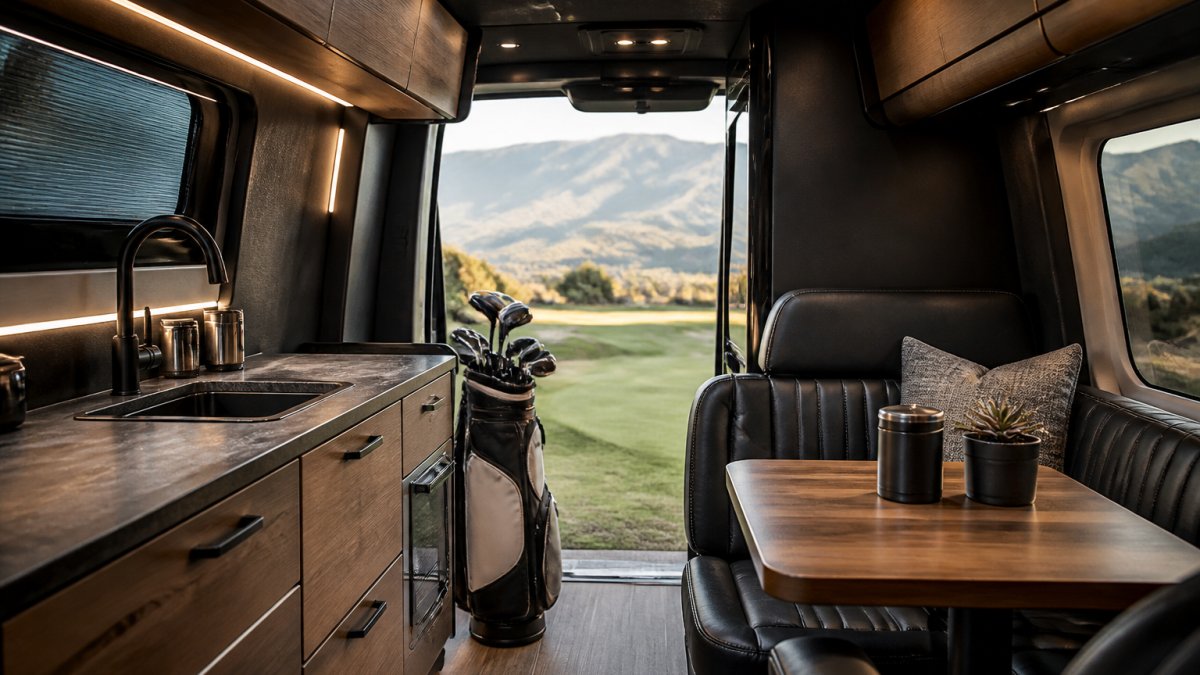
Walk the aisles at any tournament parking lot this season and you will notice the shift before anyone explains it. Luxury van interior design in 2026 borrows its language from residential architecture, not from the RV world. The best builds now read like small, mobile rooms: real wood, woven wool, sculptural seating, and lighting that flatters people rather than fluorescent tubes that flatten them.
At GOLF Cruiser, we have spent years watching how golfers actually use their vehicles between rounds. The answer shapes everything below. A van that hauls four players and four full bags to a resort has different demands than a camper, and the 2026 trends that matter most are the ones that survive real use: mud, sun, spikes, and a hundred loading cycles a year.
The five shifts we cover here, from organic materials to integrated power, share one thread. Luxury in a van is no longer about how much you can bolt in. It is about how well every surface earns its place.
Natural and Organic Materials Lead Luxury Van Interior Materials
The defining luxury van interior materials story of 2026 is a retreat from glossy plastic and toward surfaces with visible origin. Wood grain, wool, linen blends, and hand-applied finishes now signal quality more reliably than any badge on the door. But the trend only works in a van if the material survives the van. That is the part most trend roundups skip, and it is the part that decides whether your interior looks bespoke in year three or tired in year one.
A van is a hostile environment for organic materials. It vibrates constantly, swings from sun-baked heat to cold nights, holds humidity after wet gear comes aboard, and has limited ventilation compared with a house. Materials that perform beautifully in a living room can delaminate, cup, fade, or grow musty in a moving box. The 2026 builds that hold up share a few performance habits.
How Wood, Wool, and Finishes Actually Perform in a Moving Vehicle
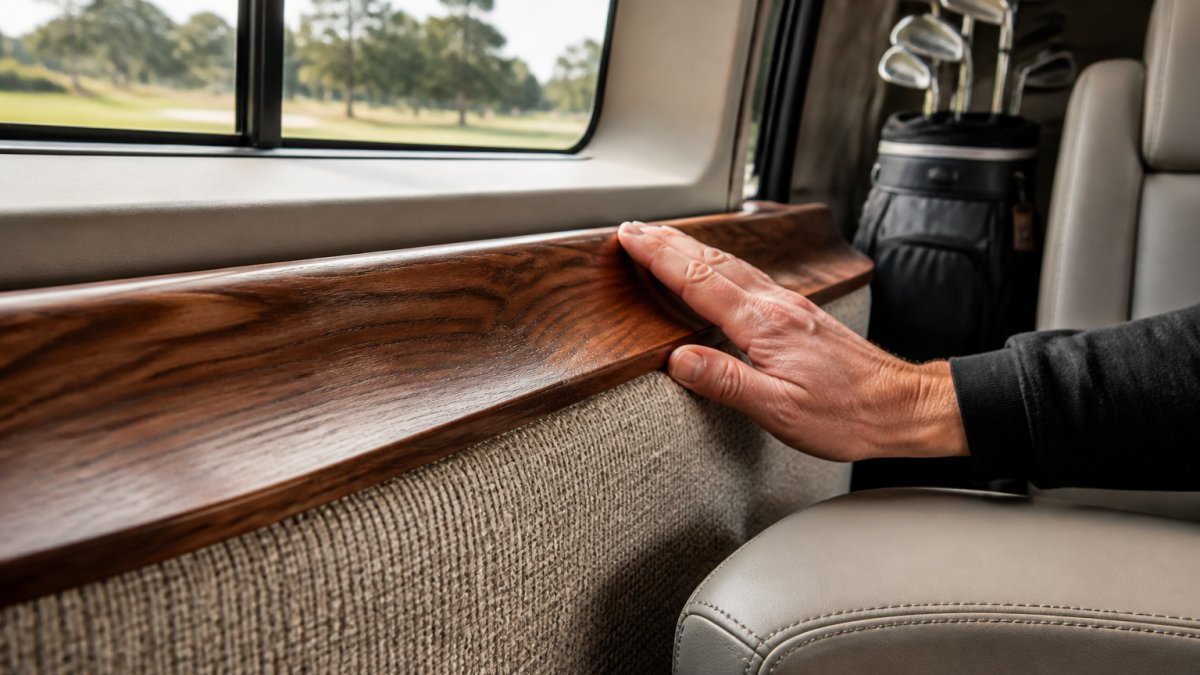
Wood and veneer. Open-pore and oil-rubbed wood is the premium look, but solid wood expands and contracts with humidity and temperature more than a stable substrate. Oil finishes are repairable in place with a re-oil, which suits a vehicle that gets scratched; high-gloss lacquer shows every chip and is hard to spot-repair.
Wool and woven textiles. Wool is naturally flame-resistant, resists soiling, and hides wear, which is why it dominates premium seating and rugs. The trade-off is moisture: wet golf gear, rain, and humid nights can leave wool damp, and a van’s limited airflow means it dries slowly.
Hand-applied plaster and limewash.
Hammered and brushed metal. Texture is a durability strategy, not just a look. Brushed, grained, and hammered surfaces camouflage scratches and fingerprints far better than smooth ones. In a vehicle that lives in parking lots and gravel paths, that matters more than a showroom shine. Hammered metal at the galley or entry hides the wear a polished surface would show in weeks.
The Cleaning and Ventilation Reality
Before you fall in love with a sample, ask two questions: how does it clean, and how does it dry? Sunscreen, spilled coffee, road salt, and wet weather gear are the real test. And because a van’s ventilation is limited, any material that holds moisture needs a path to dry.
Expressive Color: Earth Tones, Deep Indigo, and Calming Whites
Color moved in two directions at once for 2026. Earth-tone colors, warm sand, clay, olive, and mushroom, anchor the volume of most luxury interiors, while deep indigo and near-black accents add drama at the seating and headliner. Calming whites hold the ceiling and upper walls, keeping compact spaces from feeling heavy.
Balance bold aesthetics against the reality of golf shoes and wet weather gear.
Custom Golf Van Features That Define the 2026 Build
What separates a luxury van from a well-trimmed passenger vehicle is purpose. For golfers, the custom golf van features drawing the most interest this year all solve one problem: getting clubs, gear, and people to the course without compromise.
The best 2026 builds treat the van as a mobile clubhouse. That means climate-aware storage, a place to sit and change shoes, a surface for reviewing a scorecard or a strategy, and power for devices that need charging before the first tee. Luxury here is measured in minutes saved and frustration avoided, not in how many features you can list.
Golf Club Storage in Vans Without Sacrificing Cabin Space
Golf club storage in vans is where layout discipline shows. The strongest designs use vertical, secured racks along one wall or under a raised platform, keeping bags upright, ventilated, and out of the walking path.
Luxury Van Seating Layouts for Golfers, Families, and Teams
Luxury van seating layouts in 2026 split along a clear line: how many people ride, and how far. A foursome traveling to a regional tournament wants captain’s chairs with real recline and a table between them. A family or full team needs flexible rows that convert from seating to gear space in minutes.
Sculptural Furniture, Textiles, and Decorative Detailing
Sculptural furniture has arrived in vans, and it is not just vanity. Woven textiles, wool rugs, and wall hangings add warmth and absorb sound, which matters when four players debrief a round at highway speed.
Decorative detailing carries the handcrafted character buyers now expect: visible stitching, hand-rubbed edges, and small statement pieces instead of large-scale art that crowds a compact wall. Every furnishing in a moving vehicle must be secured, and soft goods should be cleanable. Beauty that rattles or stains loses its appeal fast.
Power, Water, and Tech Integration in Compact Layouts
The trend competitors underweight is infrastructure. A luxury van interior in 2026 is judged by what it can power and how quietly it does so. Integrated lithium systems, USB-C throughout, wireless charging, and a small water supply for cleaning clubs and hands are now baseline expectations in premium builds.
Plan the electrical load before the finishes. Golfers charge rangefinders, phones, watches, and speakers, and a mobile command center for a team adds tablets and a screen. Route wiring and ventilation during the build, not after.
U.S. Department of Energy guidance on vehicle electrification and charging offers useful background on how power demands are changing in modern vehicles.
What These Trends Cost and What to Skip
Exact figures depend on layout, materials, and technology, so confirm with your builder.
| Trend | Typical Planning Range | Where It Pays Off | What to Watch |
|---|---|---|---|
| Organic materials (wood veneer, wool, plaster) | Low four figures to mid five figures depending on coverage | Daily comfort and resale appeal | Cleanability, UV fading, moisture recovery |
| Earth tones and indigo | Mostly labor and textile cost; low four figures | Atmosphere in a compact space | Scuffing on high-traffic surfaces |
| Sculptural and bespoke seating | Mid four figures to low five figures per row | Relaxing before and after rounds | Weight, secure mounting, recline clearance |
| Woven textiles and rugs | Hundreds to low four figures | Warmth and sound absorption | Staining, cleaning effort, drying |
| Integrated power and water | Mid four figures to low five figures | Team logistics and device charging | Upfront planning, ventilation, load calculation |
Three Budget Tiers
Entry tier. Durable, well-chosen materials and smart storage. Think quality laminate or engineered wood in place of full veneer, tightly woven synthetic-blend upholstery in place of pure wool, and off-the-shelf secured racks. This tier buys reliability and a clean look without the bespoke price.
Mid tier. Adds hand-applied finishes on key panels, integrated power and charging, and custom seating built to your layout. This is where most golfers land, because it captures the features that change how the van works day to day without paying for one-off furniture.
Top tier. Brings bespoke sculptural furniture, premium textiles throughout, full technology integration, and custom water systems. The gains here are real but increasingly about feel and finish rather than function.
Where to Spend and Where to Skip
Spend first on layout, storage, and power. Those three decisions determine whether the van works on every trip, and they are the most expensive to change later. Retrofitting wiring or reworking a layout after the interior is finished is the costliest correction in a build.
Skip chasing every trend at once. A glossy statement finish that cannot take wear, oversized art that eats storage, or complex tech you will not use all cost money and add maintenance.
Pricing for a custom build depends on layout, materials, and technology, so we quote each project individually rather than publish a single figure. IRS guidance on Section 179 deductions explains the business-use rules that may apply to a qualifying vehicle, and your accountant should confirm eligibility for your situation.
Frequently Asked Questions
What are the biggest luxury van interior design trends for 2026?
The 2026 trends center on natural and organic materials, visible wood grain, hand-applied finishes, woven textiles and wool rugs, earth-tone and deep indigo palettes, sculptural furniture, and decorative detailing like hammered metal. In a golf van, those trends get adapted to compact layouts with durable surfaces and custom club storage. The common thread is handcrafted character over glossy, mass-produced finishes, plus layouts that support power, water, and tech integration without eating cabin space.
What luxury van interior materials hold up best in daily golf travel?
Ask how each surface is cleaned and repaired, since repairability matters more in a van than in a house. GOLF Cruiser builds on Chevrolet and GMC platforms and can walk you through material options for your layout.
How do you combine golf club storage in vans with passenger comfort?
Dedicated club storage that sits low and along a wall frees floor space for luxury van seating layouts, and it keeps bags from sliding during turns. A flexible layout lets you run four seats for a buddies trip and six or more for a family outing. GOLF Cruiser designs flexible layouts for families, golf buddies, or full teams.
Are luxury van interiors becoming more like RV interiors?
In finish quality, yes. In layout, no. RVs prioritize living space and plumbing, while a luxury van interior for golf travel prioritizes seating, club storage, and easy maneuverability. The 2026 trends borrow RV-level materials, such as woven textiles and sculptural furniture, but apply them to a vehicle that parks and drives like a van. That difference matters if you want a mobile clubhouse rather than a camper.
The challenge with luxury van interior design in 2026 is not finding beautiful ideas. It is choosing the ones that survive real trips with real gear. GOLF Cruiser builds hand-crafted, golf-specific vans on Chevrolet and GMC platforms, with custom club storage, flexible seating for families and full teams, and the space and maneuverability that make travel easier than an RV. Contact us today to plan a layout around how you actually play and travel.