
Table of Contents
- Why Tournament Organizers Are Deploying Mobile Command Centers
- Core Functions of a Mobile Command Center for Golf Tournaments
- Golf Tournament Logistics Planning: From Parking to Player Support
- Custom Golf Tournament Support Vehicles and Platform Specifications
- Building Your Tournament Operations Equipment List
- Cost-Benefit Analysis for Event Organizers
- Scaling Your Command Operation for Large Public Events
- Frequently Asked Questions
Last Updated: September 8, 2026
Why Tournament Organizers Are Deploying Mobile Command Centers
A golf tournament is a temporary city that must run flawlessly for four days and vanish without a trace. The difference between seamless operations and chaos often comes down to a mobile command center for golf tournaments, which centralizes coordination, security, and emergency response in one location.
At GOLF Cruiser, we have spent over 45 years building vehicles that solve complex operational challenges for golfers and event managers alike. The modern tournament landscape demands real-time decision-making, and command vehicles deliver exactly that by placing incident command directly where the action happens. FEMA’s guidance on incident management systems underscores how centralized command structures improve response coordination during large-scale events.
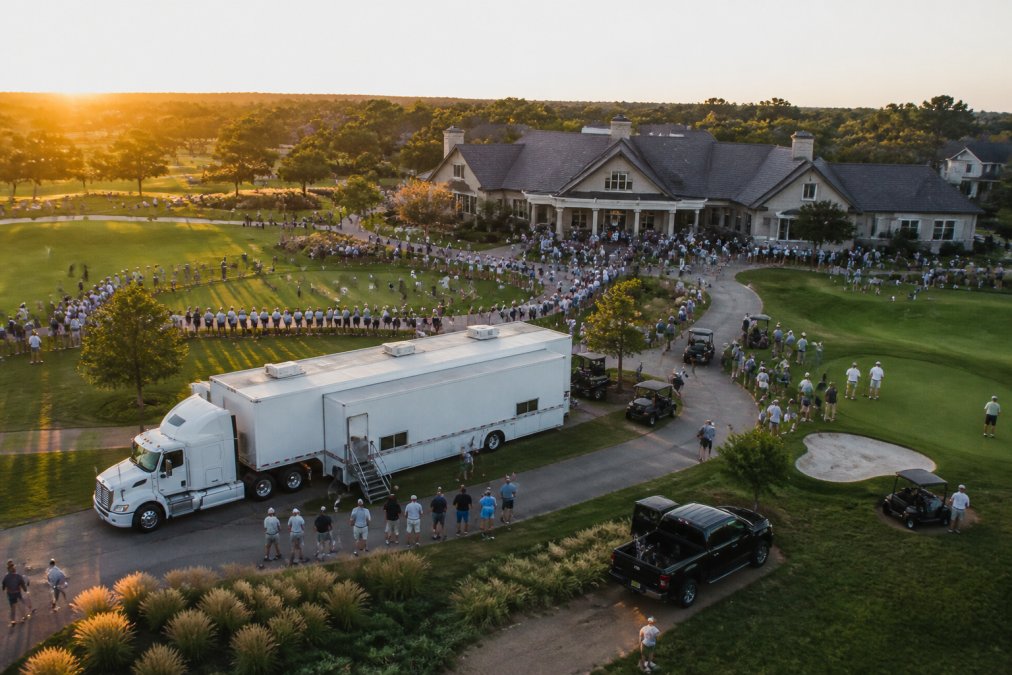
Static command posts force staff to commute between the action and their resources, wasting critical minutes. A mobile command center collapses that distance, putting leadership, technology, and personnel where they need to be.
Core Functions of a Mobile Command Center for Golf Tournaments
A mobile command center serves as the operational backbone of any professional tournament, consolidating incident command, real-time monitoring, and communication infrastructure into one centralized system for complete situational awareness.
Centralized Incident Command and Event Coordination
The primary function is establishing a single point of authority for all operations. A dedicated mobile unit provides the physical space where commanders can convene, assess situations, and issue directives without distraction.
Event coordination flows through this hub, connecting tournament directors, security leads, medical staff, and volunteer coordinators. When a spectator experiences a medical emergency or weather threatens play, the command team has the tools and authority to respond immediately, aligning with best practices for emergency operations centers.
Real-Time Monitoring and Communication Infrastructure
A mobile command center houses the radio systems, satellite uplinks, and data connectivity required to maintain constant contact with marshals, medical teams, and security personnel. Radio communications remain the backbone of on-site management, with network redundancy ensuring a single point of failure never cripples operations.
Surveillance integration allows command staff to watch crowd flow, identify bottlenecks, and spot security concerns before they escalate, making the mobile unit the visual and auditory nerve center of the event.
Golf Tournament Logistics Planning: From Parking to Player Support
Tournament logistics planning begins months before the first tee shot, yet the most critical decisions unfold during event week. A mobile command center anchors this planning by providing a physical base for coordinating everything from parking lot traffic to player transportation, tracking golf cart deployment to prevent delays.
Logistics management also encompasses equipment staging, hospitality coordination, and course maintenance scheduling. When a tournament spans 200 acres, directing resources from a central location eliminates wasted movement, making the command center the traffic controller for vehicles, personnel, and spectators.
The Unique Logistics Demands of a Golf Tournament
Unlike a stadium event with fixed gates, a golf tournament is a distributed venue spread across 18 holes, each potentially a quarter-mile apart. This creates logistics challenges a mobile command center is uniquely positioned to solve:
- Spectator Flow Management: The command center tracks crowd density at marquee holes (typically the par-3s and the 18th) using camera feeds and marshal radio reports. When a bottleneck forms, the command team can dispatch golf carts to reposition marshals or adjust wayfinding signage.
- Player and Official Transport: A tournament may operate 150 to 300 golf carts during event week. The command center coordinates the dispatch of player shuttles, ensuring a player is never late for a tee time. This requires a dedicated radio channel and a dispatcher who can see the real-time location of each cart on a digital map.
- Weather-Triggered Logistics: When lightning is detected within a 10-mile radius, the command center initiates a coordinated evacuation: air horns sound, marshals direct spectators to shelters, and carts pick up players from the farthest points. The command center tracks which holes are clear and which shelters are at capacity, preventing secondary bottlenecks.
- Equipment and Supply Staging: The command center tracks the location of heavy equipment, forklifts for leaderboard installation, water tankers for course maintenance, and catering trucks for hospitality villages, preventing conflicts with spectator foot traffic.
The Golf Cart as a Command Asset
The golf cart is not just a transport vehicle; it is a mobile node in the logistics network. Key carts are equipped with:
- Two-Way Radios: Every marshal, medical responder, and logistics coordinator carries a radio, but the carts themselves are often fitted with a second, higher-power radio unit to extend range across the course.
- GPS Tracking: Many tournament operations now equip their fleet with GPS transponders. The command center’s mapping software displays each cart’s location, allowing a dispatcher to send the nearest available cart to a player or an incident.
- First-Aid and Communication Kits: Carts assigned to roving medical teams carry an automated external defibrillator (AED), trauma supplies, and a dedicated communication link to the command center, allowing them to function as a first-response unit before a formal ambulance arrives.
The Pre-Tournament Logistics Walkthrough
Experienced tournament directors run a full-scale logistics rehearsal two days before the first round. Every key stakeholder, the head marshal, medical director, transportation coordinator, and head of security, is in the command center to test radio channels, verify camera feeds, and confirm the digital map matches the physical venue. This is where most communication gaps are found and fixed.
The Takeaway for Tournament Organizers
The logistics role is about orchestrating a complex, time-sensitive network of people, vehicles, and equipment across a large, open-air venue. The best-run tournaments have a clear, tested plan for how every logistics asset moves and communicates.
Custom Golf Tournament Support Vehicles and Platform Specifications
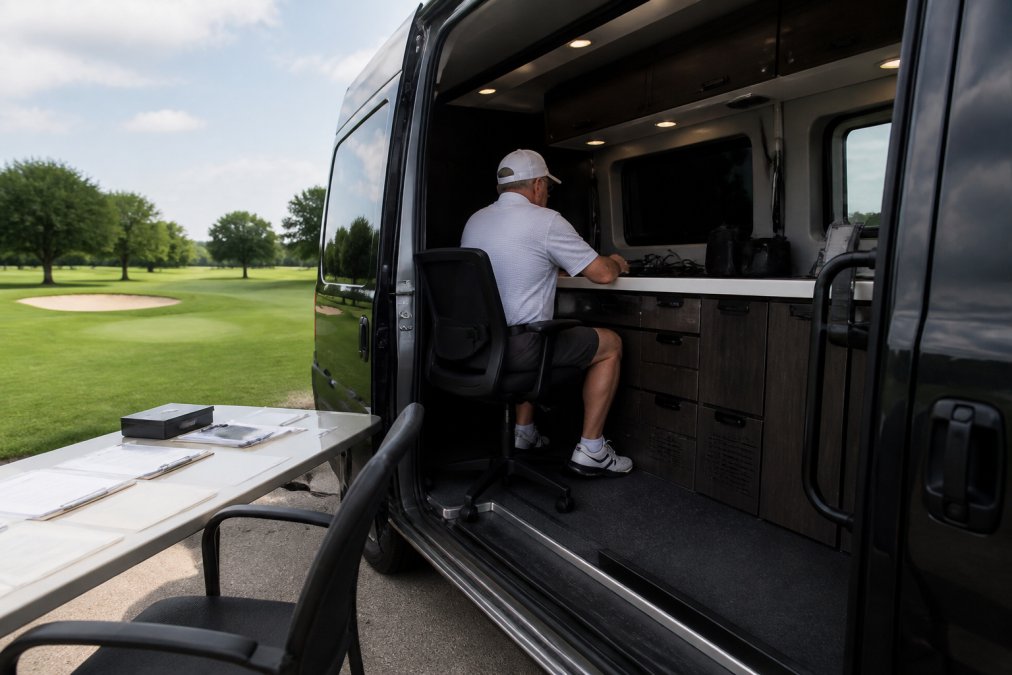
Custom golf tournament support vehicles built on commercial chassis offer the reliability tournament operations require. High-roof platforms provide standing room for command staff, while flexible interior layouts accommodate workstations, communication racks, and briefing areas.
The choice between a towable trailer and a self-propelled unit depends on the tournament’s footprint and mobility requirements. Self-contained vehicles offer greater flexibility for roving command posts, while trailers provide larger interior volumes. Fleet management considerations should factor into the decision as heavily as interior specifications.
Building Your Tournament Operations Equipment List
A tournament operations equipment list translates operational requirements into tangible assets. Every command vehicle needs a defined inventory, and organizers should build this list methodically as a procurement roadmap to ensure nothing critical is missing.
The Core Technology Stack: Beyond a Wi-Fi Hotspot
The technology stack forms the digital nervous system of tournament operations. A golf course is a uniquely challenging RF environment, often hilly, heavily treed, and spanning several hundred acres, so the command center must build a temporary, high-reliability network:
- Private Radio System (LMR): The backbone of on-course communication is a Land Mobile Radio (LMR) system, typically operating on VHF or UHF frequencies licensed to the event or the local public safety agency. The command center houses the base station and a repeater, often mounted on a temporary tower or the vehicle roof. A common configuration is a 10-watt base station with a 25-watt repeater, providing coverage for up to a 3-mile radius in open terrain.
- Cellular and Satellite Uplinks: For data, the command center relies on bonded cellular modems that combine multiple carrier signals into a single, high-bandwidth connection. For true redundancy, a satellite uplink (e.g., a Ku-band or Ka-band terminal) is used as a backup, ensuring that scoring data and emergency communications continue even if a local cell tower is congested or fails.
- Wi-Fi Mesh for the Venue: To provide connectivity for scoring terminals, media, and VIP areas, a temporary Wi-Fi mesh network is deployed. The command center acts as the network’s core, with access points placed on light poles or in tents every 200-300 yards to create a seamless coverage zone.
- Video Surveillance System: The command center is the hub for a temporary IP camera network. Cameras are strategically placed at the main entrance, the clubhouse, the merchandise pavilion, and the 18th green. The command center’s video management software (VMS) allows operators to view multiple feeds simultaneously and record footage for later review. A typical setup includes 8 to 16 cameras, each connected via Power over Ethernet (PoE) or a dedicated wireless bridge.
Power and Environmental Redundancy
Command vehicles require reliable electrical systems capable of running communication equipment, emergency lighting, and climate control for extended periods. A professional setup typically includes:
- A 15-20 kW diesel generator as the primary power source, mounted on the vehicle or a separate trailer.
- A battery bank (48V DC) with an inverter to provide uninterrupted power during generator changeovers or refueling.
- Shore power connection (120/240V AC) to plug into venue power when available, saving fuel and reducing noise.
- A dedicated HVAC system to keep electronics cool and staff comfortable, even in the heat of a summer tournament. The system must be sized to handle the heat load of multiple servers, radios, and monitors.
The Medical and Security Setup: A Functional Checklist
Medical readiness transforms a command vehicle from a logistics hub into a life-saving asset, going beyond a first-aid kit:
- Designated Patient Treatment Area: A clear, cleanable space with a treatment cot, medical oxygen, and a basic airway kit. This area is for stabilization, not surgery.
- Advanced Life Support (ALS) Equipment: Depending on the tournament’s risk profile and local regulations, the command center may stock an AED, a cardiac monitor, and a medication kit. The medical director determines the exact contents based on the expected crowd size and the distance to the nearest hospital.
- Secure Communications: A dedicated radio channel for medical teams, separate from general logistics, to ensure that emergency calls are never blocked by routine traffic.
- Security Workstations: Two to three desks with monitors for reviewing camera feeds, a secure drawer for storing confiscated items or evidence, and a direct phone line to the local police or sheriff’s department.
The Build vs. Rent Decision: A Practical Framework
For most organizers, the question is whether to rent, lease, or buy. The decision hinges on your event calendar:
- Single-Event Organizers: Renting a fully-equipped mobile command center is almost always the most cost-effective path. Rental providers handle the technology setup, maintenance, and often provide an operator. This avoids the capital expenditure and the burden of storing and maintaining a complex vehicle for 51 weeks of the year.
- Multi-Event Organizers (3+ events per year): Leasing or purchasing a vehicle becomes more attractive. The cost per event drops significantly, and you can customize the interior layout to match your specific operational playbook.
- The Hidden Cost of Ownership: Beyond the purchase price, owners must budget for annual maintenance, technology refresh cycles, insurance, and driver training. A common rule of thumb is to budget 10-15% of the vehicle’s value per year for maintenance and technology upgrades.
The Final Checklist: What to Verify Before the Tournament
A week before the event, run a full systems check from the command center:
- Radio Check: Verify every radio on the course can reach the command center’s repeater.
- Camera Test: Confirm every camera feed is visible on the command center’s main monitor.
- Power Transfer Test: Switch from generator to shore power to battery to ensure no interruption.
- Satellite Link Test: Place a test call or data transfer over the satellite link to confirm the backup path works.
- Medical Inventory: Have the medical director sign off on the expiration dates of all supplies.
A command center is only as good as its equipment list. A methodical, detailed approach to building that list, and testing it, is what separates a professional operation from a reactive one.
Cost-Benefit Analysis for Event Organizers
The investment requires justification against other tournament expenses. A single weather delay managed inefficiently, or a security incident that escalates due to slow coordination, can cost more than the vehicle itself.
The calculation extends beyond pure dollars. Tournament reputation hinges on flawless execution, and sponsors notice when operations run smoothly. The National Center for Spectator Sports Safety and Security’s event management resources highlights how proactive safety planning protects both attendees and organizational credibility. When weighed against potential liability, insurance implications, and the value of professional presentation, command vehicle investment often proves prudent.
Organizations that host multiple events annually realize the strongest return, spreading the investment across their full calendar. For single-event organizers, leasing or partnering with a mobile command provider may offer a more sensible financial path.
Scaling Your Command Operation for Large Public Events
Tournament scale dictates command complexity. A regional qualifier requires a fraction of the infrastructure needed for a major championship with 50,000 daily spectators. Scalability means building modular systems that expand through additional personnel, vehicles, and communication assets rather than replacing core architecture.
Field deployment strategies should account for multiple command nodes. While the primary mobile command center serves as the emergency operations center, satellite units positioned around the course extend coverage and reduce response times, handling routine matters locally while escalating significant incidents.
The most effective tournament operations treat the mobile command center not as a luxury but as the structural foundation of event safety, coordination, and professionalism. Organizers who invest in proper command infrastructure position themselves to handle both routine logistics and crisis situations with equal competence.
Standardized operating procedures allow this scaling to happen smoothly. When every command node follows the same communication protocols and decision frameworks, adding capacity becomes a matter of deploying resources rather than reinventing processes. NFPA’s standards on emergency services command structures provide useful reference points for organizations developing their own scalable command frameworks.
Start your scaling plan by mapping the tournament’s highest-risk zones and longest response distances. Position satellite command units to cover those gaps first, then expand outward as budget and staffing allow.
Spectators increasingly expect the same safety standards at golf events that they encounter at other major venues. A mobile command center for golf tournaments delivers the coordination infrastructure that meets those expectations, shaping every aspect of how smoothly your operation runs.
Mobile command operations represent a significant investment. The challenge lies in matching your infrastructure to your tournament’s scale and risk profile without overbuilding or leaving gaps. GOLF Cruiser builds custom golf tournament support vehicles that serve as mobile clubhouses and command centers, hand-built by American experts with over 45 years of experience on reliable Chevrolet and GMC platforms. With flexible layouts, easier maneuverability than an RV, and potential Section 179 tax advantages, these vehicles deliver the operational foundation your tournament deserves. Contact GOLF Cruiser today to explore how a purpose-built command vehicle can transform your event operations.
Frequently Asked Questions
What equipment is essential for a golf tournament mobile command center?
A functional mobile command center needs redundant radio communication systems, a satellite uplink for data connectivity, and a centralized command system with real-time monitoring software. The physical setup should include an emergency operations center layout with workstations, a patient treatment area for medical staff, and emergency lighting. For tournament operations, add a fleet management console to track golf carts and auxiliary vehicles, plus surveillance integration feeds from around the course.
How does a mobile command center improve golf tournament logistics?
A mobile command center centralizes event coordination by putting incident command, public safety personnel, and logistics managers in one location. This setup improves situational awareness across the course, allowing for faster response to weather delays or medical incidents. For tournament organizers, it streamlines site operations by providing a fixed hub for radio communications and data connectivity, which reduces the coordination time lost when staff are scattered across different buildings or vehicles.
Can a luxury van serve as a mobile command center for golf events?
Yes. A custom high-roof platform van, like those built on Chevrolet or GMC chassis, can function effectively as a mobile command center. These vehicles offer more interior space than a standard SUV and are easier to maneuver and park than a full RV or trailer. They can be outfitted with fold-down workstations for tactical support, secure storage for communications gear, and flexible seating for briefings. For smaller tournaments, this provides the command and control capability of a larger unit without the fleet management burden.
How do mobile command centers differ from standard event trailers?
Standard event trailers are primarily for storage or hospitality. A mobile command center is built around command and control operations. It includes built-in network redundancy, satellite uplink capabilities, and integrated surveillance systems. Power systems are designed to run sensitive electronics for extended periods. Unlike a trailer that requires a separate vehicle to tow and leveling at the site, a self-propelled command vehicle offers faster field deployment and can reposition easily during the event if the operational focus shifts.