
Table of Contents
- Why a Golf-Specific Van Layout Beats a Standard Conversion
- Core Layout Configurations: Seating, Sleeping, and Club Storage
- Golf Van Gear Storage Solutions That Protect Your Clubs
- Designing for Weight Distribution and Payload Capacity
- Interior Finishes: From Climate Control to Post-Round Comfort
- Understanding Custom Golf Van Pricing and Features
- Is a Luxury Van Conversion for Golfers Worth It?
- Final Thoughts on Your Custom Golf Van Interior
- Frequently Asked Questions
Last Updated: September 9, 2026
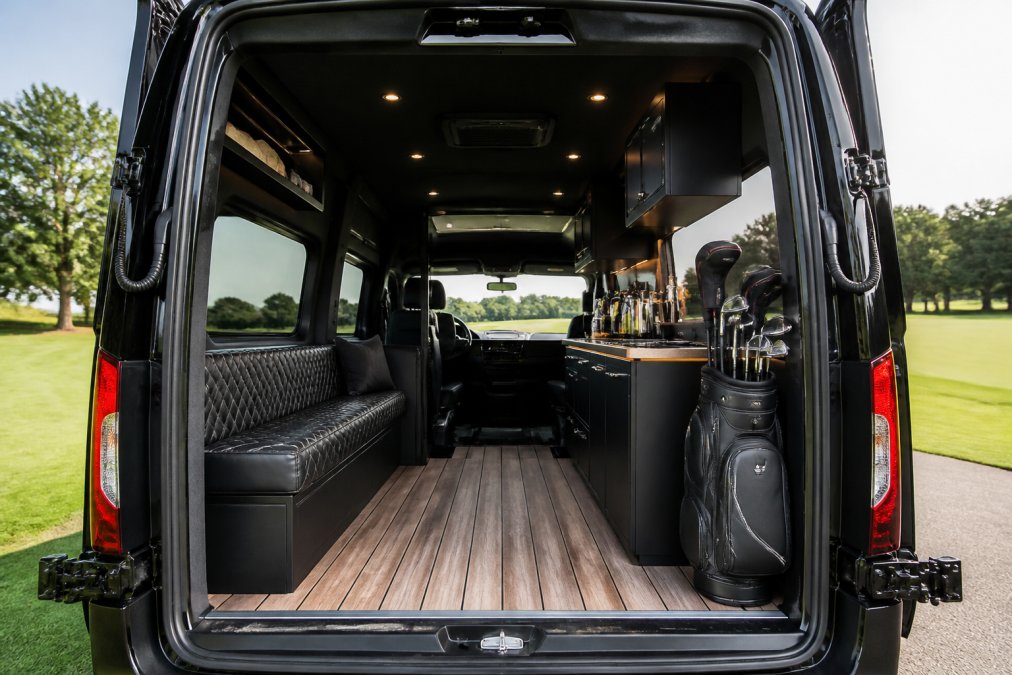
A standard campervan conversion is built around sleeping four people and cooking pasta. A custom golf van interior layout ideas approach flips that priority list, putting secure club storage, passenger comfort, and easy access ahead of camping amenities. A golf van interior is a mobile clubhouse, not a tiny home.
Most golfers who travel with friends face the same problem: standard SUVs cramp four people and their bags, while RVs are cumbersome to park and maintain. A purpose-built van solves both.
Why a Golf-Specific Van Layout Beats a Standard Conversion
The biggest mistake in van conversions is designing for generic travel rather than your actual routine. If you play golf, your routine involves transporting expensive, fragile equipment, changing shoes, and arriving ready to play. Generic campervan layouts waste floor space on stovetops and sinks you will rarely use, while shoving clubs into overhead bins or under benches where they rattle and shift.
A golf-specific layout prioritizes three things: protecting clubs, moving people efficiently, and creating a comfortable space to change before and after the round. This means dedicating prime real estate, typically the lower rear section, to secure horizontal club storage, and planning the floor plan around four passengers with gear, not two people with a kitchen.
Core Layout Configurations: Seating, Sleeping, and Club Storage
Golf van layouts generally fall into three configurations, each suited to different travel patterns.
The 2+2 Layout for Couples and Quick Getaways
This configuration uses two plush captain’s chairs up front and a rear bench or dinette that converts to a sleeping area. Clubs store horizontally along one side, low near the floor. The 2+2 layout suits couples who travel to regional courses, stay in hotels, and want a comfortable vehicle without full camper amenities.
The 4-Passenger Captain’s Chair Setup for Foursomes
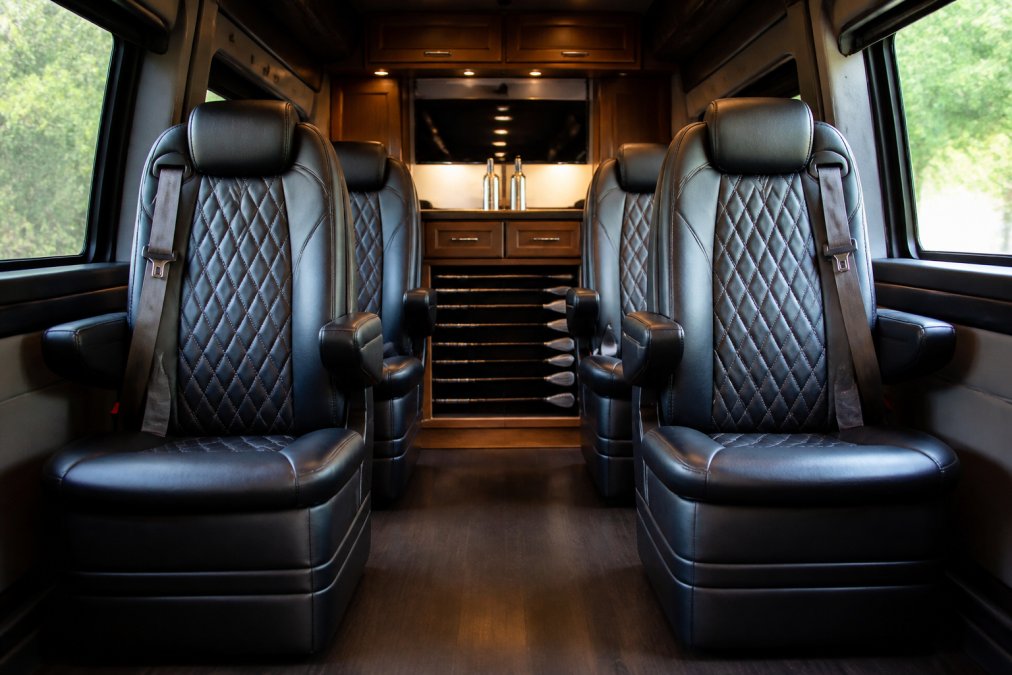
For regular foursomes, four individual captain’s chairs arranged in two rows offer the best comfort for longer drives. Each passenger gets a dedicated, ergonomic seat. Club storage typically runs along the rear wall or in a lower side compartment, with the trade-off being a smaller sleeping area or none at all. This layout prioritizes the journey and the round over overnight camping.
Team Transport: Bench Seating and Full Gear Capacity
Team captains and coaches need maximum passenger capacity plus room for many bags. A bench seat across the rear, combined with a dedicated gear bay, handles six or more passengers and a full set of clubs for each. This layout sacrifices the lounge feel for utility, but it excels as a tournament command center. Vertical storage and overhead compartments become essential here to keep the living space clear.
Golf Van Gear Storage Solutions That Protect Your Clubs
Generic campervan guides tell you to “secure your gear,” but they never address the specific problem of a golf bag. A standard staff bag is roughly 36 inches tall, 14 inches wide at the top, and 12 inches deep (usga.org). When you add a cart bag or a stand bag for a foursome, you are moving four large, rigid objects with protruding club heads that can easily dent, scratch, or snap if not properly cradled. The most common failure is treating clubs like luggage and storing them vertically in a tall cabinet. The solution is a dedicated, horizontal storage bay designed to the exact dimensions of your bags.
The Horizontal Bay: The Gold Standard for Club Protection
The safest and most accessible layout is a horizontal bay mounted low, along the floor, typically behind the rear axle or between the wheel wells. This bay should hold each bag in its own individual slot, separated by padded dividers. The critical dimension is the internal height: you need at least 12 inches of clearance to accommodate the bag’s foot and the protruding club heads. The bay’s depth should be at least 38 inches to fit a standard staff bag. The floor should be lined with a non-slip rubber mat to prevent the bag from sliding forward during hard braking.
The Latching Mechanism: More Than Just a Lock
A simple cabinet latch is insufficient. The force of a 30-pound bag in a sudden stop can generate significant momentum. The industry-standard solution is a spring-loaded, cam-style latch that pulls the bag’s base into a fixed corner bracket. For a more DIY-friendly approach, a heavy-duty ratchet strap with a padded sleeve, anchored to reinforced D-rings in the van’s floor, provides similar security. The strap must be routed over the bag’s top handle, not the middle, to prevent the clubs from shifting independently.
Accessibility: The 10-Second Rule
A storage bay is useless if it’s a hassle to access. The best layouts position the bay so that the bag’s handle is facing the rear or side door, allowing you to open the door, grab the handle, and slide the bag out in a single motion. For a side-door access, consider a pull-out tray system on heavy-duty drawer slides, rated for at least 100 pounds.
Climate Control for Your Equipment
Extreme heat is a silent killer for golf equipment. The adhesive that holds the grips on can soften and twist in a van that sits in direct sun, and the epoxy in club heads can degrade over time. A standard van interior can easily exceed 140°F on a summer day. If your van is not climate-controlled when parked, build a storage bay that is insulated and vented, line it with 1-inch rigid foam insulation and add a small, thermostatically controlled computer fan that vents hot air out.
The Trade-Off: Space vs. Security
A horizontal bay takes up prime floor space. In a 4-passenger layout, this bay will likely run the full width of the van’s rear, reducing the available space for a bed or lounge. This is the fundamental trade-off of a golf-specific build. The alternative, a vertical rack, saves floor space but risks club damage and makes loading awkward. For most golfers who travel with a foursome, the horizontal bay is the non-negotiable feature that justifies the entire conversion.
Designing for Weight Distribution and Payload Capacity
Golf equipment is heavy, and a van full of four golfers, their clubs, and luggage adds up quickly. Every van has a payload capacity, the maximum weight it can safely carry, and exceeding it compromises handling, braking, and tire life. When planning the layout, account for the weight of passengers, clubs, luggage, and any custom cabinetry or seating you add.
Distribute heavy items, like the club storage bay and water tanks if you include them, low and between the axles. This keeps the center of gravity stable and improves ride quality on the highway. Front-heavy builds cause sluggish steering, while rear-heavy builds can make the front wheels feel light at speed. Before finalizing any layout, check the manufacturer’s payload rating for your chassis and weigh your typical load to ensure you stay within safe limits. You can find detailed specifications for Chevrolet and GMC platforms through the official GMC commercial vehicle specifications.
Interior Finishes: From Climate Control to Post-Round Comfort
The interior finish is where a golf van transforms from a cargo hauler into a mobile clubhouse. The materials and systems you select must withstand sand, moisture, sweat, and the need for rapid transition from the course to a social setting. The primary goal is a space that is easy to clean, manages humidity, and provides a dedicated zone for post-round recovery.
The Post-Round Recovery Zone: A Unique Angle No Competitor Covers
The most thoughtful golf van layouts include a dedicated “mudroom” or recovery zone near the rear door, a small, sealed area with a non-porous, slip-resistant floor separated from the main cabin by a step or low divider. Here you can remove your golf shoes, strip off a wet polo, and wipe down before entering the main seating area. The design should include a sealed storage compartment for dirty shoes and a small, recessed drain or catch pan for water or sand.
Climate Control: More Than Just an AC Unit
The standard advice is to “get a good AC system.” But for a golf van, the requirement is more specific: a system that can rapidly cool a large, open cabin from a scorching parking lot down to 72°F in under 10 minutes. This often requires a high-output, rear-mounted evaporator unit, not just the factory dash AC. A common pattern in professional builds is a secondary, roof-mounted AC unit with its own compressor, delivering 15,000 to 18,000 BTU of cooling. This requires a robust electrical system, typically a 200-amp alternator and a high-capacity auxiliary battery bank.
For the storage bay, a simple passive vent is not enough. A thermostatically controlled exhaust fan, set to activate at 90°F, is a low-cost, high-value addition. For the cabin, consider a ceramic window film on all windows, it can block up to 99% of UV rays and significantly reduce solar heat gain, keeping the interior cooler before you even turn on the AC.
Sealed Flooring: The Unsung Hero
Carpet is the enemy of a golf van. It traps sand, absorbs moisture, and holds odors. The best choice is a continuous, sealed vinyl or rubber floor that can be hosed down or wiped clean. Look for a marine-grade vinyl with a non-slip texture. This flooring should be run up the walls by at least 4 inches to create a sealed cove, preventing any water or debris from seeping into the subfloor.
Seating Materials and the “Sweat Factor”
Leather is a popular choice for van interiors, but not all leather is created equal. For a golf van, you need a leather with a durable, pigmented finish that can withstand sunscreen, insect repellent, and sweat without staining. Avoid aniline leather, which is soft but highly porous and will absorb oils and moisture. For the recovery zone, consider a marine-grade vinyl that is completely waterproof and can be wiped down with a disinfectant. Main cabin seating should also be breathable, perforated leather with a cooling fan system is a premium option, but a simpler solution is moisture-wicking technical fabric seat covers for the drive home.
Acoustic Insulation: The Quiet Ride
Road noise is a constant companion on the highway, and it is fatiguing on a long drive to a tournament. A high-quality build will use a combination of mass-loaded vinyl (MLV) and closed-cell foam to dampen road and wind noise. This is not just about luxury; it’s about creating an environment where you can have a conversation with your foursome without raising your voice. The difference between a van with no insulation and one with a proper MLV install is dramatic.
Understanding Custom Golf Van Pricing and Features
Custom golf van pricing and features vary significantly based on the chassis, the extent of the conversion, and the quality of materials. A basic conversion might include seating and simple storage, while a comprehensive build adds custom cabinetry, premium upholstery, advanced climate control, and entertainment systems. Because every build is tailored to the owner, the best approach is to request a detailed quote based on your requirements.
When evaluating options, focus on the quality of the build rather than the sticker price alone. Look for hand-built craftsmanship, durable materials, and a builder with verifiable experience in full-size vehicle conversions. A cheaper conversion that cuts corners on insulation, wiring, or cabinetry will cost more in repairs and frustration over time.
Is a Luxury Van Conversion for Golfers Worth It?
For the right owner, a luxury van conversion for golfers is a sound investment that replaces the need for airline baggage fees, rental cars, and the physical strain of hauling clubs through airports. Owners who travel to tournaments six or more times a year often find the convenience transforms the experience.
Business owners should also consider the tax implications. Under Section 179 of the U.S. tax code, vehicles used for business purposes may qualify for a deduction, and a van used for client entertainment or team travel can meet the criteria. The rules are specific, so consult a qualified accountant to confirm eligibility for your situation. Guidance on the deduction is available from the IRS Section 179 deduction overview. For golfers with mobility concerns, the van’s low step-in height and open floor plan offer a far easier entry than an SUV or RV.
Final Thoughts on Your Custom Golf Van Interior
Designing the ideal custom golf van interior layout ideas starts with honest answers about how you travel. If you ride with a regular foursome, prioritize four comfortable seats and secure, accessible club storage. If you overnight at tournaments, plan for a sleeping area without sacrificing gear protection. And if you carry a team, maximize capacity with smart vertical storage and a dedicated gear bay.
The right build protects your equipment, keeps your group comfortable, and makes every trip to the course feel effortless. A custom golf van interior should feel like an extension of your game, purpose-built for the way you actually travel.
Choosing a van that fits your golf lifestyle is about more than picking a floor plan. GOLF Cruiser builds hand-crafted luxury vans on reliable Chevrolet and GMC platforms, with layouts designed around secure club storage and passenger comfort. With over 45 years of experience in full-size vehicle conversions, the team understands what golfers need. Contact GOLF Cruiser today to start designing a van that gets you and your clubs to the first tee in style.
Frequently Asked Questions
What is the best campervan layout for golf travel?
The best layout depends on your travel group size. For a foursome, a 4-passenger captain’s chair setup with rear club storage maximizes comfort and conversation. For couples, a 2+2 layout with a rear lounge or sleeping area offers more flexibility. Prioritize layouts that keep clubs secure and accessible without sacrificing passenger legroom.
How do you balance living space and club storage in a custom van?
Balance starts with a floor plan that zones the van. Dedicate the rear section to horizontal club storage with custom cabinetry, and keep the mid-section for seating. This prevents clubs from dominating the living area. Vertical storage above the wheel wells and cabinetry can hold shoes and outerwear, freeing up floor space for passengers.
How much does a custom luxury golf van conversion cost?
Pricing varies significantly based on the base vehicle, layout complexity, and finish level. A professional conversion involves the chassis, custom cabinetry, premium upholstery, and specialized gear storage. For specific pricing and features, contact GOLF Cruiser directly for a quote tailored to your layout needs and travel style.
Can a golf van layout accommodate a full team or family?
Yes. Layouts with forward-facing bench seating in the rear can transport up to eight passengers while still providing dedicated storage for multiple golf bags. These configurations work well for team travel or family outings, transforming the van into a mobile clubhouse. Discuss your passenger count with the builder to ensure the payload capacity and seating are configured correctly.